For decades, graphite has actually worked as the backbone of lithium-ion battery anodes, offering reputable cycling stability and well-established production processes.
(Battery material)
Yet graphite’s academic details ability of 372 mAh g ⁻¹ is swiftly approaching its physical limitation, developing an essential traffic jam for next-generation energy storage applications that require ever-higher energy density.
Silicon provides a compelling alternative, with a theoretical capability more than eleven times that of graphite, rising to 4,200 mAh g ⁻¹.
This phenomenal capability allows batteries that are lighter, smaller, and with the ability of keeping dramatically a lot more power each volume or weight.
The marketplace action has been quick and substantial, with worldwide shipments increasing sharply year over year and production capacity increasing at an extraordinary speed.
Industry experts constantly highlight silicon anode materials as one of the fastest-growing sections in the battery supply chain, driven by pressing need from electrical lorries, customer electronics, and arising high-power applications.
This quick growth signals that silicon anode modern technology has actually emphatically gone across the threshold from lab research to industrial-scale commercialization.
2. The Commercialization Inflection Factor
The change from graphite to silicon-based anodes is no more a remote guarantee however an unraveling truth.
(Graphite)
In very early 2026, a leading battery supplier introduced its most recent generation of high-energy-density cells, attaining cell-level power thickness well above 350 Wh/kg through low-expansion silicon-carbon anodes– a milestone that sector onlookers have defined as marking the beginning of massive business adoption of silicon anodes.
Major battery producers and vehicle OEMs are now actively incorporating silicon anode materials into their product roadmaps, with a number of high-volume assembly line currently in operation.
Silicon-graphite composites with modest silicon filling stand for the lowest-risk commercialization path for the present phase of electric automobile change, while pure silicon anodes, providing even greater capability, stay a longer-term suggestion as the sector remains to improve producing procedures and address durability difficulties.
The application scope is additionally broadening quickly beyond traditional power devices and customer electronic devices.
Today, premium electrical automobiles, electric vertical departure and landing airplane, and progressed robotics applications are becoming significant development markets for silicon anodes, because these sectors need power density levels that graphite-based systems can no longer sustain.
Silicon-carbon materials are extensively recognized as the trick to crossing this efficiency obstacle and enabling the next generation of light-weight, long-range power storage space.
3. The Technical Obstacles That Held Silicon Back
In spite of its remarkable capacity benefits, silicon has actually dealt with three interconnected technical barriers that have actually traditionally postponed its extensive commercialization.
(Silicon Anode Materials)
The very first and most essential obstacle is extreme quantity growth.
Silicon undergoes volumetric growth of a number of hundred percent throughout lithiation, causing mechanical stress that results in bit crack, electrode structural collapse, and loss of electrical call with existing collectors.
The 2nd difficulty concerns the strong electrolyte interphase, a passivation layer that bases on the anode surface during the first charge cycle.
In silicon anodes, the severe volume growth creates this layer to repeatedly fracture and reform with each cycle, taking in lithium inventory and degrading cycle life via irreparable lithium loss and fast ability decay.
The 3rd obstacle is reduced inherent electrical conductivity, as silicon’s semiconductor properties restrict electron transportation within the electrode, demanding the unification of conductive ingredients to maintain sufficient rate capability.
These obstacles are interconnected: quantity expansion worsens SEI instability, and inadequate conductivity substances the performance deterioration from both.
Overcoming this set of three of barriers has actually called for sustained advancement throughout multiple fronts– from nanostructural design to composite designs to electrolyte chemistry– and has actually driven the development of the commercial solutions we see today.
4.Silicon-Carbon Composites: The Leading Industrial Service
Silicon-carbon compounds have become the leading commercial approach to utilizing silicon’s capability while minimizing its downsides.
(Anode Materials)
The carbon part serves several vital functions: it provides a conductive matrix that compensates for silicon’s poor electrical conductivity, creates buffer area to suit quantity changes, and strengthens interfacial communications between silicon particles and the bordering electrode structure.
The industrial energy behind silicon-carbon anode materials is undeniable, with production quantities expanding steadily and new manufacturing centers coming on-line around the world.
Several distinct manufacturing strategies exist for silicon-carbon compounds, each with its very own benefits.
CVD-based silicon-carbon materials entail transferring silicon onto carbon substrates through chemical vapor deposition, making it possible for accurate control over silicon content and circulation, and technical growth in this space is focusing on increasing silicon loading, optimizing carbon finishing style, and enhancing first coulombic efficiency and cycle stability.
Nano-porous silicon-carbon compounds supply another pathway, where the porous structure offers inner void area that fits silicon development internal as opposed to external, minimizing anxiety on the total electrode architecture.
Firms are additionally discovering pre-lithiated silicon-carbon products, which make up for first lithium intake throughout SEI development, boosting first-cycle effectiveness and overall power thickness.
The diversity of these strategies shows the market’s recognition that no solitary service fits all applications– different silicon loadings, particle sizes, and composite architectures fit various performance demands and price targets, and continuous research study continues to improve each of these paths.
5. The Vital Function of Advanced Binders in Silicon Anode Efficiency
The binder system in a silicon anode is much more than a glue– it is an energetic part that essentially identifies electrode integrity and cycling security.
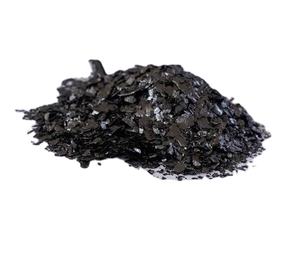
( Battery material)
Standard graphite anodes depend on a typical binder system integrating styrene-butadiene rubber with carboxymethyl cellulose, however, for silicon-containing anodes, this system commonly verifies inadequate in holding up against the repeated stress and anxiety from quantity adjustments.
The binder must fit enormous mechanical stress, maintain bond between silicon particles and the present collection agency with thousands of expansion-contraction cycles, and contribute to preserving the electric network within the electrode.
Polyacrylic acid has actually emerged as an exceptional binder for silicon anodes because of its versatility and solid attachment homes, with countless studies showing that electrodes employing PAA plus SBR binders continually deliver the best performance, attaining high preliminary coulombic performance, high reversible capacity, and secure capability retention over extended cycling.
Past PAA, scientists are exploring ternary composite binders that combine multiple polymer parts to attain collaborating impacts, and some have actually reported ternary composite binders designed specifically for silicon-carbon blend anodes.
The binder market is reacting to these developing requirements, with CMC/SBR systems enhanced for silicon blends currently leading the market due to their ability to develop secure, high-capacity composites, while water-based binders consisting of SBR, CMC, and PAA are increasingly related to next-generation silicon-based electrodes, showing the sector’s press towards more sustainable manufacturing procedures.
Binder engineering has also become an essential technique for alleviating the coulombic efficiency trough– the particular dip in efficiency triggered by silicon volume expansion, repeated SEI renewal, and consistent lithium loss– as advanced binder designs maintain architectural stability and promote secure SEI formation, straight attending to the origin of capability fade.
6. Conductive Additives: Building the Electrical Freeway
Silicon’s low innate electrical conductivity indicates that conductive additives are not optional– they are crucial for attaining useful price ability and cycle life.
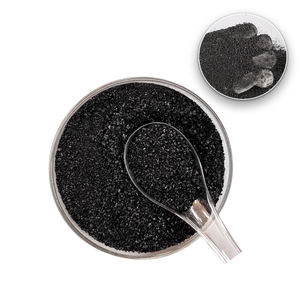
(Silicon Anode Materials)
Conventional carbon black has long worked as the typical conductive additive in battery electrodes, but the demands of silicon anodes have pressed the sector towards advanced carbon architectures.
Carbon nanotubes and graphene have emerged as crucial conductive ingredients driving technological innovation in this area, displaying remarkable electric conductivity, excellent mechanical flexibility, and one-of-a-kind dimensional advantages contrasted to traditional carbon black.
CNTs supply one-dimensional conductive pathways that bridge between silicon fragments, while graphene uses two-dimensional conductive sheets that can twist around and interconnect fragments, and three-dimensional carbon skeletons comprising both carbon nanotubes and graphene sheets serve as a conductive matrix while additionally providing buffer space to suit volume adjustments throughout cost and discharge.
The double carbon network approach has revealed particular promise, with research demonstrating that silicon nanoparticles efficiently encapsulated in minimized graphene oxide and carbon nanotube interlaced networks– with high surface, huge pore quantity, and bountiful permeable framework– achieve enhanced lithium storage space kinetics.
Advanced conductive additives additionally add to SEI stability, as fluoride-doped carbon conductive ingredients make it possible for the building and construction of LiF-rich SEI layers on silicon anodes, decreasing general anode quantity expansion and improving cycling security without causing dangerous side responses.
The growing need for high-performance conductive additives is shown in the fast expansion of production capacity for specialized carbon materials, especially porous carbons designed especially for CVD silicon-carbon anodes, which are seeing phenomenal development rates as makers seek to optimize their silicon anode formulas.
The option of conductive ingredients need to be customized to the details silicon fragment dimension, morphology, and composite design employed in each application– for silicon nanoparticles below a specific threshold, carbon nanotube networks can offer reliable electron transportation without excessive additive loading, while for bigger silicon particles or higher silicon web content anodes, hybrid conductive networks combining several carbon designs might be needed to keep performance.
7. The Evolving Supply Chain and Production Landscape
As silicon anode commercialization increases, the supply chain is undertaking rapid makeover to satisfy expanding demand.
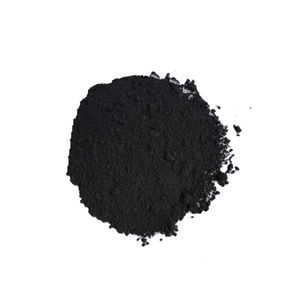
(Anode Materials)
International essential battery silicon anode material suppliers include established chemical companies and specialized product distributors, with the leading players jointly holding a considerable share of the market, while brand-new entrants continue to emerge with cutting-edge manufacturing modern technologies.
Manufacturing capacity is being built across multiple areas, with a number of major centers having actually begun commercial-scale operations in recent months, and extra capacity developments are proactively underway.
As an example, one leading producer has actually started EV-scale production of its sophisticated silicon-carbon product at a brand-new manufacturing facility designed for substantial yearly outcome, equal to a substantial battery capability, and this material has demonstrated compatibility with several cathode chemistries, making it possible for both high power density and ultra-fast billing capacities.
Various other business have revealed supply agreements for silicon-carbon compounds made as drop-in substitutes for graphite in existing lithium-ion cell production procedures, while joint ventures between material experts and chemical titans are advancing the automation of next-generation composite anode materials.
Domestic production ability is likewise expanding quickly in different areas, with a number of companies reporting raising monthly deliveries and launching new assembly line that have actually currently provided samples to leading battery manufacturers for performance screening.
The upstream resources supply chain is also advancing, with essential basic materials including metallurgical silicon, silane, graphite, and permeable carbon, and providers guaranteeing steady product supply and top quality consistency with committed manufacturing centers.
International need for silane, specifically, is being stimulated by silicon anode manufacturing development, as silane-based courses stay a key production pathway for many producers, while alternative production methods– such as low-temperature decrease procedures– use the capacity for more affordable and sustainable manufacturing.
Techno-economic evaluations have demonstrated that these innovative paths can dramatically lower the cost and ecological footprint of silicon manufacturing, making them attractive alternatives for the following wave of capacity growth.
As the whole environment– from resources to end up anode powders– remains to mature, the silicon anode market is poised for sustained growth, with manufacturers and suppliers working closely to address technological challenges, range production, and bring high-performance, cost-competitive services to the global battery market.
At Nanotrun, we are dedicated to progressing silicon anode innovation via our extensive profile of high-performance materials, including high-purity silicon-based powders, custom-formulated silicon-carbon composites, and progressed conductive additive services engineered to fulfill the demanding needs of next-generation lithium-ion batteries.
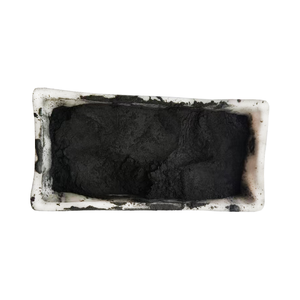
( Battery material)
We recognize that the change to silicon anodes is not a simple material replacement however a system-level improvement that requires cautious optimization of every element, and our group works closely with customers to establish tailored services that resolve their certain performance targets, producing constraints, and expense purposes.
As the silicon anode market proceeds its quick expansion, Nanotrun stands ready to sustain battery producers, cell producers, and OEMs in making the transition from graphite to silicon-enhanced electrodes, and we welcome you to discover exactly how our advanced product options can aid you achieve greater energy density, longer cycle life, and remarkable battery efficiency.
Call us today to discuss your silicon anode material requirements and uncover the Nanotrun distinction.
8. Provider
TRUNNANO is a globally recognized Molybdenum Disulfide manufacturer and supplier of compounds with more than 12 years of expertise in the highest quality nanomaterials and other chemicals. The company develops a variety of powder materials and chemicals. Provide OEM service. If you need high quality Molybdenum Disulfide, please feel free to contact us. You can click on the product to contact us.
Tags: Battery material,Silicon Anode Materials,Anode Materials
All articles and pictures are from the Internet. If there are any copyright issues, please contact us in time to delete.
Inquiry us [contact-form-7]
]]>Choosing the ideal ceramic crucible is not just a technical detail; it is a fundamental choice that impacts the success of your high-temperature procedures. The crucible acts as the key container for melting, sintering, and heat-treating materials, and its performance straight affects item pureness, power effectiveness, and functional safety. At Ozbo, we recognize that every application has unique needs. As a dedicated vendor of innovative ceramic materials and tailored production solutions, we supply high-purity ceramic powders and completed crucible services to sectors worldwide. This guide uses a comprehensive contrast of the most usual ceramic crucible materials, helping you navigate the complicated landscape of options to locate the ideal suit for your specific requirements. Our objective is to encourage you with the knowledge to make an informed decision, ensuring optimum efficiency and durability for your essential procedures.
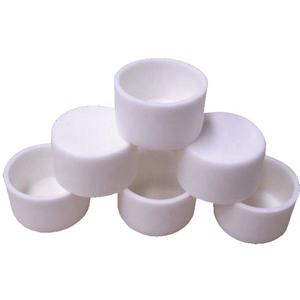
(Ceramic Crucible)
2. Alumina Crucibles: The Versatile Workhorse
Alumina, or aluminum oxide (Al2O3), is the most extensively made use of ceramic product for crucibles, earning its reputation as a reputable and flexible workhorse. High-purity alumina crucibles, with an Al2O3 material above 99%, supply a remarkable equilibrium of properties that make them ideal for a vast variety of applications. Their popularity originates from their superb chemical inertness, good thermal security, and cost-effectiveness contrasted to more customized ceramics. For many basic laboratory and industrial processes, an alumina crucible gives a reputable and affordable solution. Its prevalent schedule and well-understood attributes make it a best choice for individuals who require a tested, well-rounded entertainer without the costs expense related to innovative materials.
Alumina crucibles show exceptional high-temperature efficiency. They can withstand continuous use at temperatures as much as 1600 ° C and sustain temporary direct exposure approximately 1800 ° C. This broad operating temperature level variety covers the demands of many ceramic sintering, glass melting, and steel heat-treating processes. Along with thermal resilience, they flaunt strong resistance to chemical corrosion, protecting the crucible from degradation by several acids, alkalis, and molten materials. In addition, high-purity alumina crucibles are designed to hold up against thermal shock, indicating they stand up to splitting when based on rapid temperature changes. This mix of high pureness, temperature resistance, and chemical security makes alumina a trustworthy and versatile option for regular procedures.
However, alumina crucibles do have restrictions. They are not suggested for usage with materials that chemically strike alumina, such as liquified alkali metals or specific fluxes. Their thermal conductivity is less than a few other sophisticated ceramics like silicon carbide or aluminum nitride, which can lead to longer home heating and cooling down cycles and much less consistent temperature circulation. For applications requiring very high thermal conductivity, exceptional thermal shock resistance, or outright non-wetting with particular liquified steels, different products like silicon carbide, aluminum nitride, or boron nitride might be better. Understanding these compromises is vital to selecting a crucible that not only meets your temperature demands however additionally maximizes your entire procedure.

(Alumina crucible)
3. Silicon Carbide Crucibles: The High-Performance Champ
Silicon carbide (SiC) crucibles stand for a substantial step up in efficiency, offering a mix of high stamina, outstanding thermal conductivity, and superior wear resistance. These crucibles are the conventional selection for requiring commercial applications, specifically in steel casting and melting, where fast warmth transfer and sturdiness are vital. Compared to traditional clay-graphite or alumina crucibles, SiC crucibles are denser, stronger, and extra immune to erosion, causing a considerably longer service life. Their remarkable thermal conductivity, often three to five times that of alumina, guarantees much faster heating, more uniform temperature levels throughout the thaw, and minimized power intake. This effectiveness translates to greater efficiency and lower operational prices.
The efficiency of SiC crucibles is better specified by their particular manufacturing process. A number of types of SiC crucibles are available, each with distinctive homes. Reaction-bonded silicon carbide (RB-SiC) is created by penetrating a permeable SiC preform with liquified silicon, which reacts to create extra SiC that bonds the structure. This procedure is affordable for large, complicated forms. Nevertheless, RB-SiC contains some recurring cost-free silicon, which can restrict its maximum use temperature and chemical resistance. On the other hand, pressureless sintered silicon carbide (SSiC) is made by sintering high-purity SiC powder at heats without used stress, leading to a fully dense, extremely pure material with superb mechanical residential or commercial properties and chemical resistance. SSiC provides exceptional performance in severe settings yet at a greater price. Recrystallized silicon carbide (RSiC) is produced by a high-temperature evaporation-condensation procedure, yielding a permeable structure with remarkable thermal shock resistance and high pureness, making it optimal for applications entailing severe temperature gradients. Each kind offers various efficiency and spending plan demands.
When picking a SiC crucible, it is crucial to think about the specific type that best suits your procedure conditions. For basic steel melting, reaction-bonded SiC provides a great balance of efficiency and expense. For applications requiring optimum pureness, chemical resistance, and high-temperature toughness, pressureless sintered SiC is the exceptional choice. If your procedure entails fast and repetitive thermal cycling, recrystallized SiC’s exceptional thermal shock resistance is vital. Ozbo can provide advice on selecting the optimal SiC crucible kind, ensuring you obtain the appropriate material for your specific melting, sintering, or heat-treating application. Our competence in innovative porcelains permits us to customize services that optimize effectiveness and crucible life expectancy.

(Silicon carbide crucibles)
4. Advanced Nitride Ceramics: Light Weight Aluminum Nitride, Silicon Nitride, and Boron Nitride
For specialized applications where traditional ceramics fail, advanced nitride porcelains use unparalleled performance. Light weight aluminum nitride (AlN), silicon nitride (Si3N4), and boron nitride (BN) each have one-of-a-kind properties that make them important in state-of-the-art markets such as semiconductor production, electronic devices, and aerospace. These products are crafted to satisfy extreme demands, including ultra-high thermal conductivity, extraordinary thermal shock resistance, and chemical inertness in the most harsh settings. While they command a greater rate point than alumina or basic SiC, their performance advantages can be important for procedure success and product top quality in cutting-edge applications.
Light weight aluminum nitride crucibles are treasured for their exceptionally high thermal conductivity, which can be over 5 times that of alumina. This residential property permits extremely reliable and uniform warm transfer, making AlN perfect for applications needing specific temperature level control, such as crystal growth and semiconductor handling. AlN likewise has a thermal growth coefficient carefully matched to silicon, minimizing thermal tension and enhancing compatibility with silicon wafers. It can hold up against temperatures up to 1400 ° C in air and much higher in inert atmospheres, and it uses excellent electrical insulation. However, AlN is vulnerable to oxidation at really high temperatures and can be much more challenging to device than a few other ceramics, which can impact production costs.
Silicon nitride crucibles are renowned for their impressive resistance to thermal shock and their non-wetting behavior with lots of molten steels, particularly light weight aluminum. Si3N4 can be subjected to quick temperature modifications from space temperature approximately 1000 ° C without fracturing, a property that significantly prolongs its life span in cyclic home heating procedures. It maintains high stamina at elevated temperatures and exhibits outstanding chemical security, standing up to assault from the majority of inorganic acids and several natural materials. This mix of residential properties makes silicon nitride an outstanding option for handling hostile molten steels and for applications where the crucible is exposed to severe thermal cycling.

(Advanced Nitride Ceramics)
Boron nitride crucibles supply an unique set of benefits, consisting of superb machinability and severe chemical inertness. BN is among minority ceramics that can be easily machined right into complicated, high-precision forms using standard tools, which is a considerable benefit for customized crucible layouts. It shows really low thermal growth and outstanding thermal shock resistance, efficient in standing up to duplicated quenching from 1500 ° C without splitting. BN is chemically stable and does not react with a lot of liquified metals, making it ideal for melting high-purity alloys and for applications where crucible contamination need to be stayed clear of. It can be used at up to 1800 ° C in a vacuum and up to 2100 ° C in an inert environment. However, BN has reduced mechanical strength and is a lot more vulnerable to oxidation in air at heats, restricting its use to safety atmospheres or vacuum problems.
5. Specialized Oxide Ceramics: Quartz, Mullite, and Spinel
Beyond the typically made use of alumina and advanced nitrides, a variety of specialty oxide porcelains provides targeted benefits for certain applications. Integrated quartz, mullite-based structures like diamond mullite and cordierite mullite, and magnesium light weight aluminum spinel each provide an one-of-a-kind mix of properties such as phenomenal pureness, high thermal shock resistance, or exceptional chemical resistance to particular slags. These materials are usually picked for niche applications where their particular toughness outweigh the wider efficiency of even more general-purpose porcelains. Recognizing these specialized choices allows you to adjust your product option for optimal procedure results.
Integrated quartz crucibles are defined by their incredibly high pureness, with SiO2 purity usually exceeding 99.998%. This makes them the material of choice for the semiconductor and photovoltaic or pv sectors, where they are used for the vital process of drawing single-crystal silicon. Their high pureness makes certain that the molten silicon is not contaminated, a non-negotiable need for producing high-grade electronic-grade silicon wafers. Integrated quartz also offers superb thermal shock resistance and a very low coefficient of thermal development, making it secure under fast temperature changes. However, quartz crucibles are palatable items, generally made use of for a solitary crystal pull, and have a relatively low maximum usage temperature of around 1600 ° C. ^
. Diamond mullite and cordierite mullite crucibles incorporate the residential or commercial properties of their basic products to supply balanced performance. Corundum mullite, a composite of alumina (corundum) and mullite, provides high thermal shock resistance, great chemical security, and outstanding mechanical toughness at high temperatures. Its thermal development coefficient is tiny, making it dimensionally steady under thermal biking. Cordierite mullite leverages the very reduced thermal development of cordierite, which provides it exceptional resistance to thermal shock, combined with the high-temperature toughness of mullite. These crucibles are commonly used in the porcelains market for firing kiln furnishings and in applications where good thermal shock resistance and moderate temperature level capacity (up to 1400 ° C )are called for. They represent an economical remedy for many commercial heating processes.
Magnesium aluminum spinel (MgAl2O4) crucibles are a high-performance oxide alternative understood for their excellent resistance to thermal shock and chemical assault, specifically from basic slags and antacids metals. With a melting point of 2135 ° C and a refractoriness of about 1900 ° C, spinel can stand up to extremely high temperatures. It is made use of in different induction heaters and is specifically appropriate for melting non-ferrous steels and handling harsh slags. Spinel crucibles can accomplish a lengthy life span, commonly exceeding 100 cycles in applications below 1300 ° C. While not as universally utilized as alumina, spinel’s certain resistance to basic atmospheres makes it an invaluable material in particular metallurgical and glass-making processes.

(Specialty Oxide Ceramics)
6. Silicon Nitride-Bonded Silicon Carbide Crucibles
Silicon nitride-bonded silicon carbide (Si3N4-SiC) represents a composite product that combines the high thermal conductivity and put on resistance of SiC with the excellent thermal shock resistance and chemical stability of Si3N4. In this product, silicon carbide grains are bound with each other by a matrix of silicon nitride, which develops throughout a reaction sintering procedure. This composite framework causes a crucible material that is extremely resistant to thermal biking, mechanical tension, and rust from molten steels and slags. The Si3N4 bond gives a strong, refractory link in between the SiC fragments, enhancing the overall strength and thermal shock resistance of the material beyond that of reaction-bonded SiC alone.
These crucibles are specifically fit for demanding applications in the metallurgical and shop markets. They are made use of in numerous heater kinds for melting and holding non-ferrous steels, such as aluminum, copper, and zinc alloys. The material’s resistance to wetting and rust by molten light weight aluminum makes it a superior option for aluminum foundries, where crucible life is a major price variable. In addition, silicon nitride-bonded silicon carbide is made use of in the manufacturing of riser tubes and other parts that enter into call with aggressive melts. The material’s capacity to stand up to both the thermal tensions of cyclic operation and the chemical strike of harsh slags brings about significantly longer life span contrasted to conventional clay-graphite or alumina crucibles.
When choosing a silicon nitride-bonded silicon carbide crucible, consider the details operating problems, including temperature, atmosphere, and the type of metal or slag it will certainly contact. These crucibles supply a considerable improvement in performance and durability for requiring commercial melting applications, often validating their greater preliminary price with decreased downtime and less replacements. Ozbo provides experience in picking the ideal composite crucible material to meet your details procedure requirements, assisting you accomplish greater performance and lower total operating costs. Our advanced ceramic options are engineered for the toughest industrial obstacles.
7. Exactly how to Choose the Right Porcelain Crucible for Your Application

(Silicon Nitride-Bonded Silicon Carbide Crucibles)
Choosing the ideal ceramic crucible includes an organized evaluation of your process demands. The very first and most essential parameter is the maximum operating temperature level. You have to pick a material that can conveniently endure your process’s optimal temperature level, with a margin of security. Take into consideration the atmosphere also; some materials, like boron nitride and silicon nitride, are best made use of in vacuum cleaner or inert environments at their highest temperatures, while alumina and silicon carbide execute well in oxidizing settings. The crucible’s compatibility with the products it will certainly consist of is similarly important. It should be chemically inert to the fee and any kind of changes or slags to avoid contamination and crucible degradation.
Past temperature and chemical compatibility, consider thermal shock resistance. If your process includes rapid heating or air conditioning, a material with reduced thermal development and high thermal conductivity, like silicon nitride or recrystallized silicon carbide, is essential to stop splitting. The needed crucible sizes and shape also influence material choice. While materials like boron nitride are quickly machined to complicated shapes, others like pressureless sintered silicon carbide may have constraints. Ultimately, examine the cost of the crucible versus its expected service life. A much more expensive crucible that lasts 10 times much longer is typically much more affordable in the long run than a less expensive one that requires frequent replacement.
For standard research laboratory and lots of basic industrial processes, high-purity alumina crucibles offer an outstanding balance of performance, chemical resistance, and expense. For non-ferrous metal melting and applications demanding high thermal conductivity and use resistance, silicon carbide crucibles are the remarkable selection. For the most requiring applications entailing extreme thermal cycling, harsh thaws, or ultra-high pureness demands, progressed products like silicon nitride, aluminum nitride, boron nitride, or composite materials are necessary. By thoroughly evaluating your certain process specifications and talking to product specialists like Ozbo, you can select that optimizes performance, expands crucible life, and enhances your functional efficiency.
8. Final thought: Partnering with Ozbo for Your Crucible Requirements
Picking the best ceramic crucible is a critical choice that directly influences the high quality, efficiency, and cost of your high-temperature operations. As we have discovered, the landscape of ceramic crucible products is diverse, with each option– from the versatile alumina to the high-performance silicon carbide, the advanced nitrides, and the specialized oxides– using a distinct set of residential properties customized to details applications. Understanding these distinctions is the very first step toward enhancing your process. The material you select must straighten with your temperature requirements, chemical environment, thermal cycling problems, and budget plan restraints to guarantee trustworthy and constant outcomes.
At Ozbo, we are committed to being more than just a supplier; we are your partner in product selection and process optimization. With our deep proficiency in advanced ceramics and a thorough product range that consists of high-purity ceramic powders and custom-fabricated parts, we are geared up to assist you with the selection process. Our goal is to assist you discover not just a crucible, yet the optimal solution that enhances your efficiency and product top quality. We comprehend the intricacies of each product and can supply customized referrals based upon your unique operational difficulties.

(Ceramic Crucible)
We welcome you to explore just how Ozbo’s innovative ceramic options can meet your specific crucible requirements. Whether you require a typical alumina crucible for routine research laboratory job or a custom-engineered silicon nitride crucible for a requiring industrial procedure, our team prepares to aid. Call us today to review your application, and allow us aid you achieve excellence in your high-temperature processes with the ideal ceramic crucible material. Partner with Ozbo for reliability, efficiency, and professional support in every crucible you utilize.
9. Supplier
Ozbo focus on the research and development, production and sales of ceramic products, serving the electronics, ceramics, chemical and other industries. Since its establishment in 2015, the company has been committed to providing customers with the best products and services, and has become a leader in the industry through continuous technological innovation and strict quality management.
Our products includes but not limited to Aerogel, Aluminum Nitride, Aluminum Oxide, Boron Carbide, Boron Nitride, Ceramic Crucible, Ceramic Fiber, Quartz Product, Refractory Material, Silicon Carbide, Silicon Nitride, ect. If you are interested in alumina oxide ceramic, please feel free to contact us.
Tags:Ceramic Crucible,alumina crucible,silicon carbide crucibles
All articles and pictures are from the Internet. If there are any copyright issues, please contact us in time to delete.
Inquiry us [contact-form-7]
]]>With the constant evolution of industrial infrastructure globally– from urban water networks and long-distance oil and gas pipelines to petrochemical plants and fire defense systems– shutoffs, pipelines, and fittings remain the unrecognized heroes that maintain everything streaming. For procurement experts and designers, the difficulty is actual: when faced with Ball Valves, Butterfly Valves, Gate Valves, Globe Valves, Examine Shutoffs, Control Valves, and Fire Defense Valves, exactly how do you select the right one for the job? The answer relies on a handful of aspects– media qualities, exactly how frequently you operate the valve, stress and temperature scores, and the space you have for installment.
Datang, as a producer running through its own independent site, has actually long focused on providing a full package: valves of all significant kinds, Stainless Steel Piping and Carbon Steel Pipes, and a complete schedule of Pipe Fittings. This write-up walks you through an in-depth comparison of the 7 most prominent shutoff groups, discuss the key points of pipeline material selection, and briefly covers suitable connection techniques– all to offer you a clear course via the maze of commercial piping system selections.
1. Deep Dive into the 7 Significant Valve Categories
1.1 Round Valves– The Versatile Workhorse for Shut-Off Applications
A Sphere Valve utilizes a spherical closure unit with a bore through its center, revolving 90 degrees to open or close the circulation course. Its worldwide popularity is no crash– it incorporates reduced circulation resistance, fast quarter-turn procedure, and dependable sealing efficiency. The shutoff seats are normally made from PTFE or reinforced polymers, which function magnificently in tidy media, gases, water, and gently destructive environments. For high-pressure, large-diameter applications, the trunnion-mounted ball design is the go-to selection; for smaller, budget-friendly lines, the floating round arrangement does the job just great.
That said, Ball Valves have their restrictions. Considering that the sealing depends on line contact between the spherical surface area and the seat, any type of unpleasant fragments in the media can easily scratch the surface area and trigger internal leakage. That makes them an inadequate suitable for slurry, neglected circulating water, or any type of stream carrying solids. At heats, polymer seats might slip or deform, which is why metal-seated or fire-safe layouts come to be necessary.
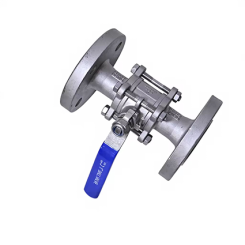
(Ball Valves)
Common applications: gas circulation stations, refinery product, city gas networks, and cleansed water systems.
What Datang uses: Stainless-steel (304/316L) and Carbon Steel (WCB) alternatives, floating and trunnion-mounted kinds, fire-safe and anti-static structures, and both split-body and welded-body designs, with dimension arrays from DN15 approximately DN600.
1.2 Butterfly Valves– The Smart Selection for Large-Diameter Water Systems
A Butterfly Valve utilizes a disc that rotates within the shutoff body to control flow. Its most significant selling points? Portable framework, light-weight, and very little setup area– specifically in big sizes (DN200 and above), where it clearly outshines Sphere Valves and Entrance Valves in cost-effectiveness. Sealing can be soft (lined with rubber or PTFE) or difficult (metal-to-metal). Soft-seated kinds are fine for tidy water at area temperature level, while hard-seated variations deal with vapor or gently abrasive media at greater temperature levels.
The downsides? Even totally open, the disc remains in the flow course, creating obvious resistance. And also, securing depends on the flexibility of the seat or eccentric compression, so under high stress, it doesn’t match the tightness of Round Valves or Gate Valves. Triple-offset styles enhance securing performance dramatically, but they additionally push the rate up.
Typical applications: water therapy plant inlet/outlet mains, cooling water recirculation systems, HVAC chilled water headers, and large-diameter ventilation ducts.
What Datang provides: wafer, lug, and flange connection types; soft-seated variations with EPDM, NBR, or PTFE liners; hard-seated multi-layer metal styles; pressure scores from PN10 to PN40.
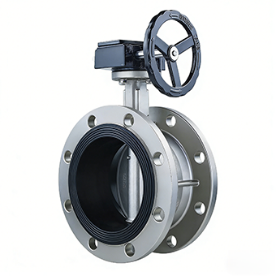
(Butterfly Valves)
1.3 Gateway Valves– The Traditional Favorite for Low-Resistance Shut-Off
An Entrance Valve runs by raising a gate or wedge backwards and forwards within the body to obstruct or open up the flow. Its standout attribute is the straight-through circulation path, which offers it the most affordable flow resistance among all shutoff types– making it the default choice for pipes where pressure decrease is a significant worry. That claimed, Gateway Shutoffs aren’t designed for regular operation. The travel is long, the action is sluggish, and each cycle uses the sealing surface areas as eviction slides versus the seats.
Entrance Shutoffs come in rising-stem and non-rising-stem arrangements. Rising-stem kinds let you see the shutoff position at a glance, making them optimal for above-ground piping; non-rising-stem kinds save clearance and job well in hidden or restricted spaces. Wedge-type gateways develop tighter seals as they close, handling high-temperature vapor lines effortlessly, while parallel-slide gates are better matched for low-pressure, large-diameter water systems.
Normal applications: nuclear power plant major heavy steam lines, crude oil transmission block shutoffs, wastewater plant inlet/outlet headers, and fire pump discharge lines.
What Datang provides: cast steel and Stainless Steel rising-stem and non-rising-stem Gateway Valves, wedge and parallel-slide layouts, with bevel equipment or electric actuator options for remote operation.
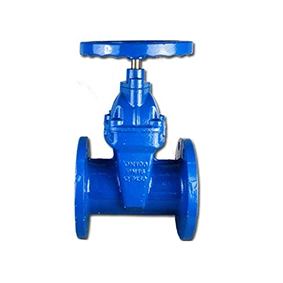
(Gate Valves)
1.4 Globe Shutoffs– The Trusted Partner for Accurate Throttling
A Globe Shutoff utilizes a disc that relocates linearly along the seat centerline, adjusting the circulation location to control the media. The inner circulation course compels the media to transform instructions, which produces high resistance and significant stress drop– that’s the main drawback. But that same tortuous path gives the World Shutoff something its rivals can’t match: exceptional throttling precision. And when completely shut, the disc and seat produce a self-tightening seal with remarkable integrity.
World Valves can be found in right, angle, and Y-pattern layouts. The Y-pattern variation angles the stem at 45 degrees to the circulation, reducing resistance and making it appropriate for frequent policy. The disc profile can be cone-shaped, needle-shaped, or allegorical, depending on the circulation features you need.
Regular applications: boiler feedwater law, steam desuperheating stations, chemical activator feed control, and pressed air branch line throttling.
What Datang provides: T-pattern, angle, and Y-pattern Globe Valves, with disc faces hard-faced with cobalt-based alloys for wear resistance; hand-operated handwheel, bevel equipment, or pneumatically-driven diaphragm actuator choices.
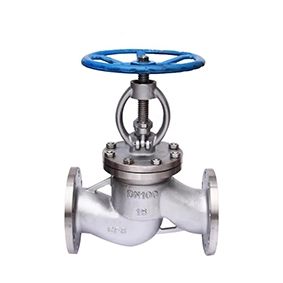
(Globe Valves)
1.5 Check Shutoffs– The Passive Safety And Security Barrier
An Inspect Shutoff is fully automatic– it opens up with ahead circulation and nearby gravity or springtime force when circulation turns around, stopping heartburn. At pump discharges, compressor electrical outlets, and parallel equipment trains, Examine Shutoffs are the essential safety and security tool that shields expensive equipment from reverse rotation or water hammer damage.
Swing-type Check Shutoffs have a disc that pivots on a hinge pin, supplying low flow resistance and matching large-diameter straight or upright lines. Lift-type Check Shutoffs assist the disc up and down along an overview slot– they seal tighter however have higher resistance, making them a far better suitable for small-diameter, high-pressure systems. Dual-plate Examine Valves feature 2 semicircular discs that swivel a typical pivot, shutting swiftly with a compact impact; they’re the fastest-growing enter oil, gas, and chemical projects. Something to enjoy: quick closure can cause water hammer, so in high-lift pump stations, designs with dashpot dampers or slow-closing mechanisms are worth thinking about.
Typical applications: pump discharge anti-backflow, vapor catch systems, fire pump outlet lines, and chemical plant injection factors.
What Datang provides: swing-type, lift-type, and dual-plate Inspect Shutoffs, with counterweight or hydraulic dashpot choices for sluggish closure; materials including Carbon Steel, Stainless Steel, and duplex steel.
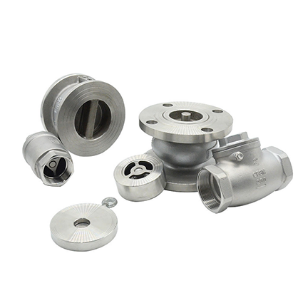
(Check Valves)
1.6 Control Valves– The Last Act in Process Automation
A Control Shutoff is the end-element in an automated control loop. It takes a signal from the controller, moves the actuator, and changes the valve plug setting to control flow, pressure, temperature, or fluid level. The real refinement depends on the circulation characteristic contour (linear, equal-percentage, or quick-opening) and the shutoff’s capacity to speak with the control system.
Usual type of body include right single-seat, straight double-seat, cage-guided, and angle shutoffs. Single-seat valves use low leakage yet can’t deal with high differential stress; double-seat valves endure higher pressure drops yet leak extra; cage-guided valves run quieter and handle vibration far better. With the increase of commercial IoT, wise positioners currently sustain HART, Profibus, and Modbus methods, offering plant drivers real-time feedback and diagnostic data.
Common applications: chemical activator temperature control, power plant feedwater circulation law, gas pressure-reducing terminals, and wastewater aeration control.
What Datang uses: single-seat, double-seat, and cage-guided Control Valve bodies, with electric or pneumatic diaphragm actuators; trim products adjustable for anti-cavitation and anti-erosion demands.
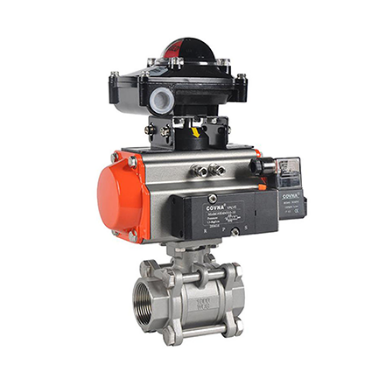
(Control Valves)
1.7 Fire Protection Valves– A Regulatory-Driven Need
Fire Defense Valves are specifically developed for automatic sprinkler systems, fire hydrant networks, and fire pump settings up. What sets them aside from common valves is the need for fast activation under emergency situation conditions, well-founded reliability, and plainly defined pressure setups. Typical kinds include fire-rated Entrance Valves, fire-rated Butterfly Valves, deluge valves, damp alarm system valves, and pressure-reducing valves.
The option reasoning right here is different from industrial valves– it’s driven less by the media itself and more by the system kind (damp, dry, pre-action, or deluge) and the danger classification you’re shielding. Given that these systems sit still for extended periods, interior leakage and corrosion-induced sticking are the major failing threats. That’s why rust-proofing, seal product aging cycles, and simplicity of routine screening ended up being top concerns.
Typical applications: skyscraper lawn sprinkler risers, petrochemical plant fire loops, underground utility tunnel fire areas, and storage tank ranch foam systems.
What Datang offers: fire-rated Entrance Valves and Butterfly Valves with internal and outside epoxy finish; alarm valves complete with slow down chambers, water electric motor gongs, and pressure switches; fully suitable with Fire Combating Pipelines and Grooved Fittings for a full system option.
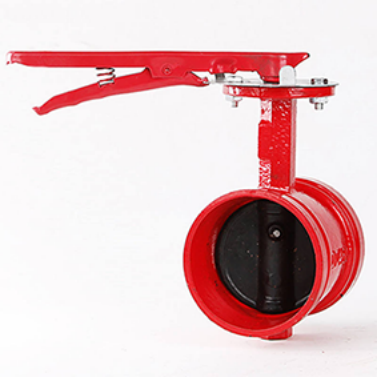
(Fire Protection Valves)
Quick Comparison Table– Seven Significant Valve Classifications at a Glimpse

(Major Valve Categories Comparison)
Note: The figures over are basic market referrals. Actual performance relies on material option, sealing style, and making precision.
2. How Pipeline Material Selection Works with Your Shutoff System
Once you’ve settled on the valve kinds, matching the piping material is the next crucial step. Pipes aren’t simply channels– their inside surface finish straight influences how well your shutoffs seal, and their wall surface density determines the system’s stress border.
2.1 Stainless-steel Pipes– The Go-To for Corrosive Provider
Stainless Steel Water lines offer superb resistance to consistent deterioration and matching, making them a staple in chemical processing, food and pharmaceutical hygienic lines, and offshore applications. Austenitic qualities like 304/304L and 316/316L are the most common; 316L, with its molybdenum enhancement, handles chloride-bearing atmospheres better than 304. When you’re running Stainless Steel Pipes, the valve bodies and interior trim need to likewise be stainless to stay clear of galvanic corrosion between dissimilar metals.
Welded and flanged connections are both primary options for Stainless Steel Pipes. Welding offers you a leak-tight, smooth bore, though it needs argon securing on-site; flanged joints are easier to uncouple for maintenance, however you require to make sure the gasket material works with the media.
Typical markets: great chemicals, drugs, bio-fermentation, seawater desalination, and food and drink.
Datang’s technique: Stainless Steel Valves + Stainless Steel Pipeline + Stainless-steel Pipe Fittings– a completely integrated corrosion-resistant system that leaves no weak links.
2.2 Carbon Steel Pipes– The Heavy Lifter for Power and Heavy Sector
Carbon Steel Pipeline combine high stamina with strong cost-effectiveness, making them the dominant option in oil, gas, power generation, and district home heating. Usual standards consist of ASTM A53, A106, and API 5L, covering numerous stress courses and low-temperature sturdiness requirements. The major downside? Rust resistance is limited. In damp environments or when lugging harsh fluids, you’ll require exterior layers and inner liners for protection.
When it comes to linking Carbon Steel Pipeline to shutoffs, welding or butt-welding is the norm for high-pressure systems– joint toughness needs to match the moms and dad material. In tool- to low-pressure water and fire systems, flanged and grooved connections are extra usual. Something to watch: make certain the pressure class of your pipelines and valves match. If your pipeline is ranked Class 150 but your shutoff is Class 300, it’s excessive without adding any kind of worth; if the valve is lower-rated than the pipeline, it comes to be the system’s weakest link.
Normal sectors: long-distance oil/gas pipelines, main home heating networks, industrial steam lines, and pressed air headers.
Datang’s strategy: Carbon Steel Pipes and fittings rated to the very same stress courses (Course 150/300/600) as our valves, with smooth and welded alternatives available, covering all wall surface densities per ASME B36.10.
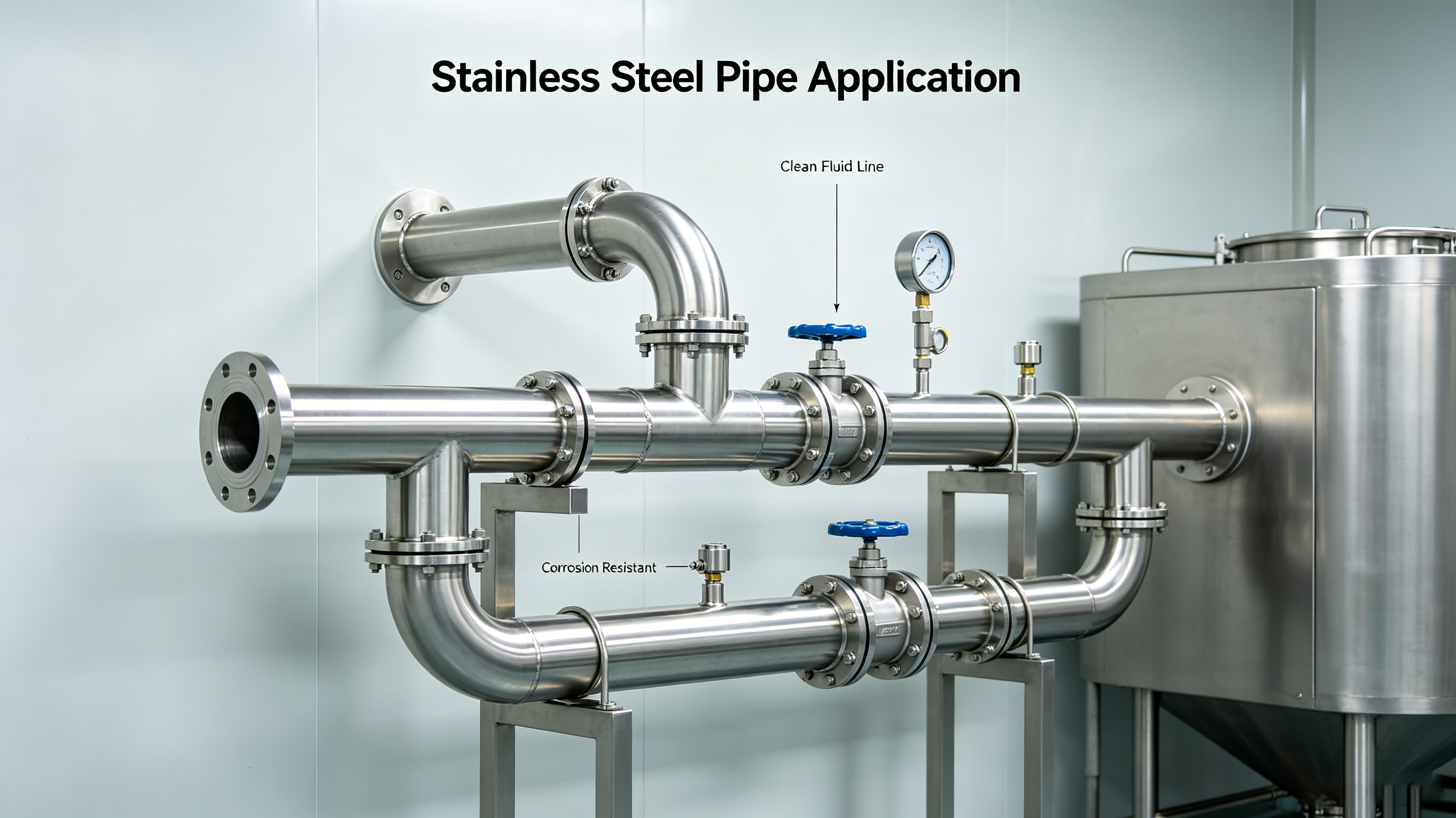
( Pipe Application)
2.3 Fire Fighting Pipelines– A Specialized Category of Its Own
Fire Battling Pipelines are mostly carbon steel or galvanized carbon steel, however they follow their own collection of standards for deterioration defense and pressure screening. NFPA demands commonly require inner galvanizing or epoxy layer to withstand internal corrosion from lasting water call. External covering depends on whether the pipeline is hidden, revealed inside your home, or mounted outdoors.
An additional key difference: hydrostatic examination pressure for Fire Combating Pipelines is typically 1.5 times the working stress, held for a specified time to validate system integrity. When Datang materials both Fire Protection Valves and Fire Combating Pipes, we can do a pre-shipment joint pressure test to confirm the entire system executes as designed prior to it ever reaches your website.
Datang’s technique: fire-rated Gate/Butterfly Valves + internally/externally covered Fire Battling Pipelines + Grooved Fittings– a complete chain from pump space to sprinkler heads, lowering purchase intricacy.
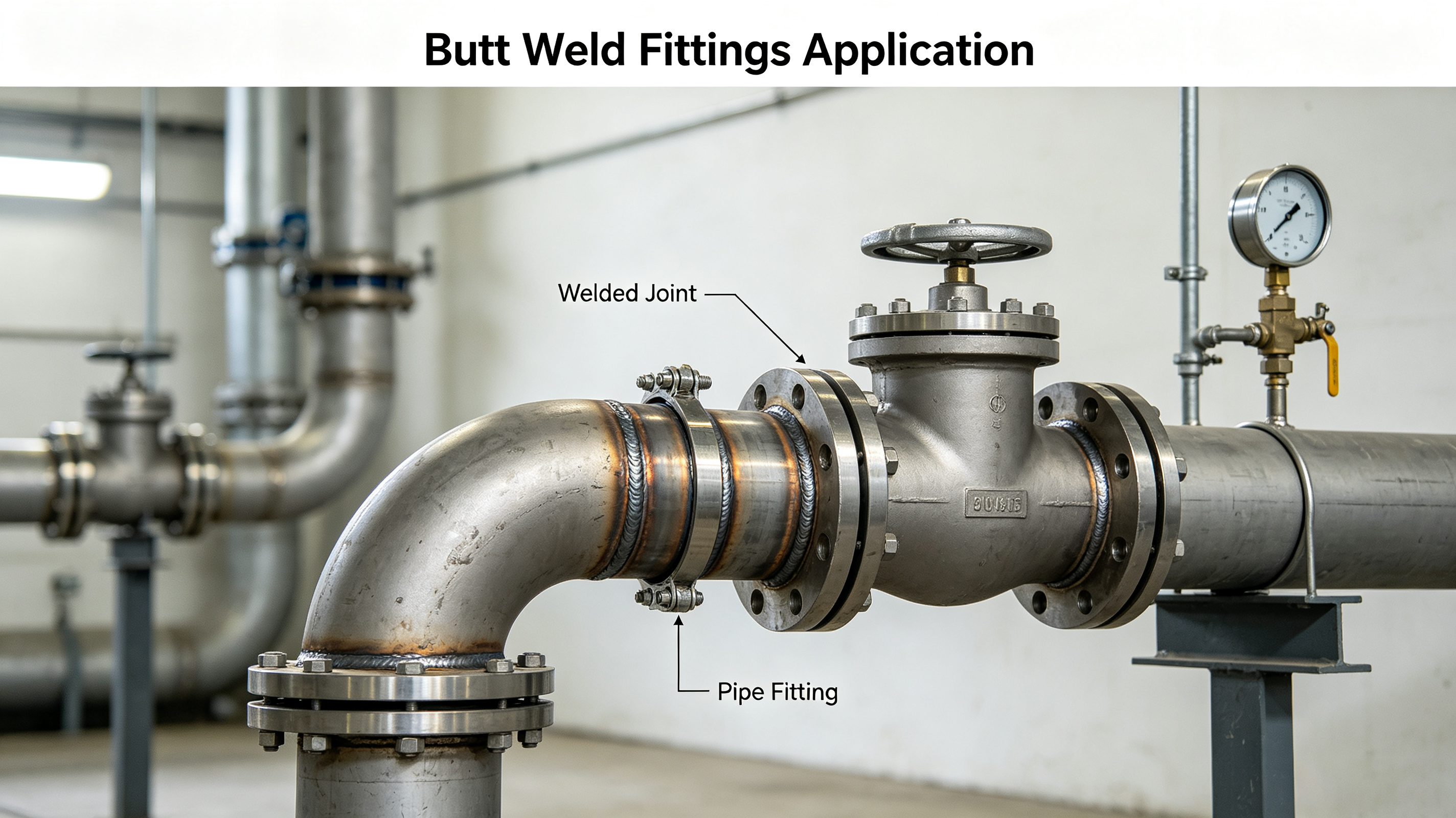
( Butt Weld Fittings Application Application)
3. A Quick Look at Pipeline Fittings Connection Approaches
A piping system isn’t simply shutoffs and pipes– you likewise require installations to transform instructions, reduce or enlarge sizes, produce branches, and connect parts. The appropriate fitting choice can make or break your installment performance and long-lasting dependability.
 Stainless-steel Pipeline Fittings: consisting of elbow joints, tees, concentric/eccentric reducers, and caps– made from the very same stainless grades as the pipelines and signed up with by welding to keep deterioration resistance intact at the joints. Perfect for food, chemical, and sanitary systems.
Flanges: the most traditional bolted connection, offering simple disassembly and compatibility with a vast array of valves and tools. Face kinds consist of RF (increased face), FF (flat face), and RTJ (ring-type joint)– gaskets require to match temperature level and stress problems. Datang products Flanges that are totally compatible with our valves and pipes (ANSI/DIN/JIS requirements), so you do not encounter bolt-hole imbalance or mismatched securing faces throughout installation.
Grooved Fittings: these make use of a mechanical coupling and a gasket to develop a fast, bolt-free connection. After roll-grooving the pipe ends, you break in the gasket and tighten up the combining. This approach is a favorite in fire protection and water systems– installation is significantly faster than welding, and the joint allows for some angular deflection, which gives it suitable seismic resistance. Quality control right here focuses on groove depth and size accuracy, plus the compression ratio design of the rubber gasket.
Butt Weld Fittings: built for serious solutions– heat, high stress, and thermal cycling– like power plant major heavy steam headers and refinery heating system inlets/outlets. Butt Weld Fittings match the wall surface density of the moms and dad pipeline and usage full-penetration welds that create joint strength equal to the base material. Wall density option and bevel prep work are important to weld high quality. Datang supplies these installations with correctly machined bevels and finish caps for security, ready for area fit-up and welding.
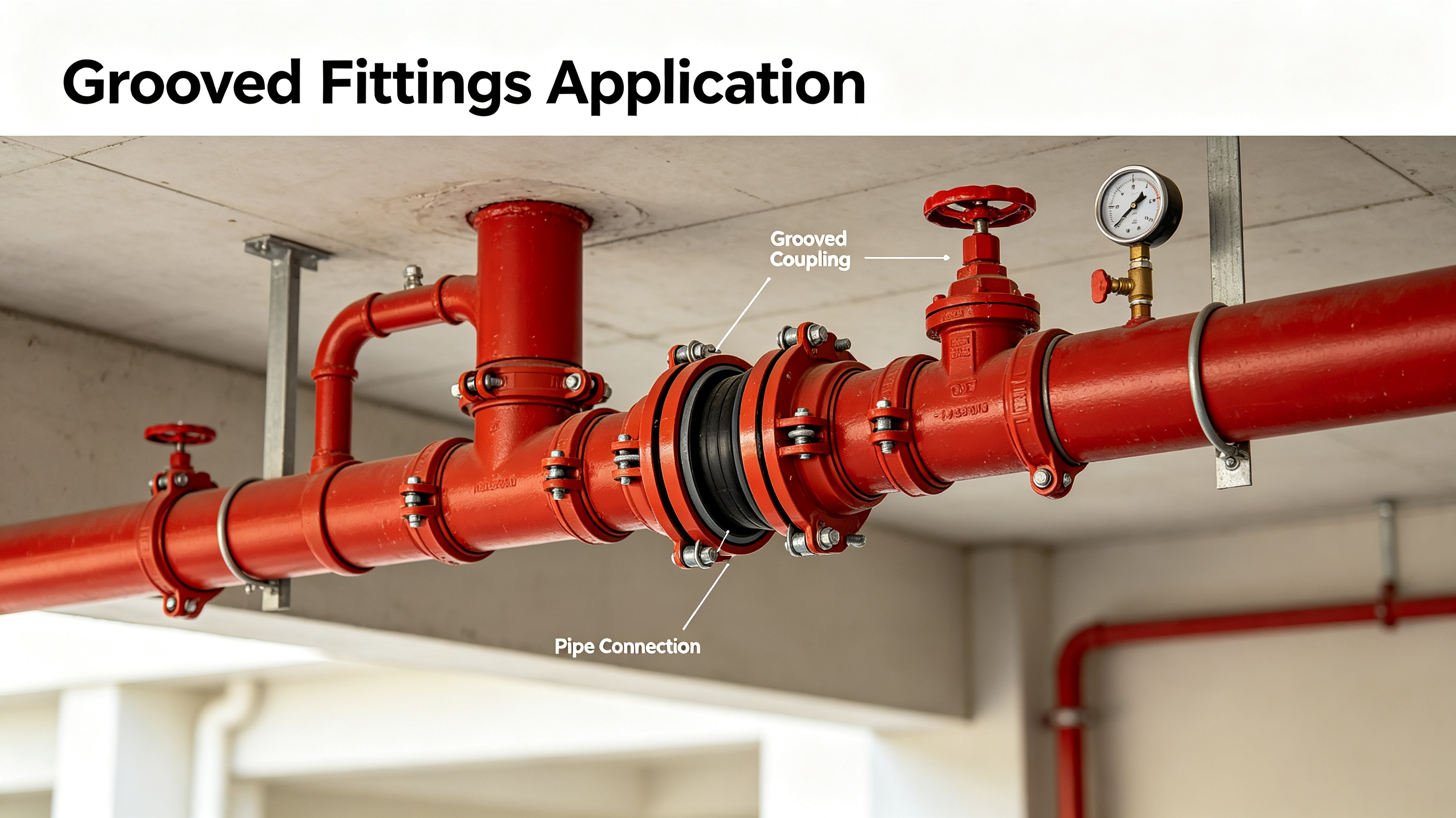
( Grooved Fittings Application Application)
Bringing all of it with each other: an industrial piping system is even more than just a pile of valve products. Whether you’re evaluating the fast shut-off of a Round Shutoff versus the low resistance of a Gate Valve, making a decision in between the throttling precision of a Globe Shutoff and the automated intelligence of a Control Valve, or satisfying the conformity needs of Fire Defense Shutoffs– every category has its very own wonderful place. And the pipes and installations that tie them together are just as crucial. Selecting the best materials and connection approaches ensures your shutoffs can in fact supply the efficiency you’re depending on.
Datang, operating via our very own independent website, brings valves, pipes, and fittings into one merged product profile, offering purchase teams a less complex, much more consistent way to resource full systems. There’s no universal “ideal”– just the best suitable for your media, stress, temperature, operating regularity, and installment constraints. That’s the reasoning that brings about systems that are both risk-free and affordable over time.
Supplier
LUOYANG DATANG ENERGY TECH CO., LTD. is a professional industrial valve supplier, dedicated to providing reliable flow control solutions for fire protection systems, HVAC, water treatment, and industrial piping networks. If you are interested, please feel free to contact us!
All articles and pictures are from the Internet. If there are any copyright issues, please contact us in time to delete.
Inquiry us [contact-form-7]
]]>In the facility and interconnected world of modern chemistry, there exists a class of particles that acts as the utmost pacifist between the unmixable. Surfactants are not merely commercial components; they are the molecular architects of our lives, the invisible force that enables oil and water to coexist, dust to release its grip, and medicines to liquify within our bodies. For centuries, humanity resisted the persistent legislations of surface tension, limited by the natural repulsion between hydrophobic and hydrophilic compounds. We saw a world constrained by these boundaries, where cleaning was a fight of strength and formula was a video game of concession. This is the tale of how we harnessed the amphiphilic nature of issue to redefine the borders of possibility. We stand at the vanguard of interface scientific research, where the manipulation of molecular polarity determines the performance of whatever from a straightforward bar of soap to innovative nanotechnology. Our brand was birthed from the realization that the service to separation did not depend on pressure, however in the fragile balance of a dual-natured particle. We sought to introduce harmony to chemistry, verifying that by improving the bond in between the incompatible, we could develop a cleaner, healthier, and more effective future. This is the narrative of link, filtration, and the fragile equilibrium needed to grasp the user interface. It is a testimony to the power of a single molecule to change the globe around us.
(Surfactants)
Brand Origin: Connecting the Separate
Our story starts not in a gleaming high-rise building, but in the humble monitoring of a soap bubble and the aggravation of a discolored garment that declined to yield. The creators were disappointed by the constraints of very early detergents, which had a hard time in difficult water and left residues that dulled textiles and broken surface areas. They knew that the secret to real cleansing power lay in the specific adjustment of surface area stress, however this produced a brand-new issue: producing a molecule that was aggressive against dirt yet gentle on the atmosphere. The difficulty was to engineer a surfactant that might decrease the interfacial tension to near absolutely no without compromising safety and security or biodegradability. This paradox became our fascination. We pulled back into the lab, driven by the belief that nature held the blueprint for the perfect emulsifier. We were determined to locate a molecular structure that can act as a global bridge, connecting the polar and non-polar globes with beauty and effectiveness.
The Genesis of the Twin Nature. The early days were defined by ruthless synthesis and failure. Many carbon chains were grafted to polar heads, examined, and thrown out as we looked for the best hydrophilic-lipophilic equilibrium (HLB). We were looking for a surfactant that can penetrate the tiny gaps of a fabric, lift the soil, and maintain it put on hold in the clean water. The development came when we transformed our interest to the specific plan of the hydrophobic tail and the hydrophilic head. We realized that by managing the size of the carbon chain and the nature of the polar group, we might dictate exactly just how the molecule behaved at the interface. It was a Eureka minute that permitted us to create a surfactant that worked not just externally, however deep within the matrix of the product being cleansed. We had actually split the code of micelle formation, showing that by organizing particles into spherical frameworks, we might trap and get rid of oils that were formerly impossible to remove. This discovery noted the birth of our brand name, a brand name dedicated to redefining the extremely essence of cleanliness and formula.
Core Refine: The Science of the User interface
The development of our high-performance Surfactants is not an issue of simple mixing; it is a precise orchestration of organic synthesis and colloid chemistry. It is a process that requires absolute control, where the size of a carbon chain or the charge of a head group can suggest the distinction between a cutting edge cleaner and an ineffective sludge. We do not produce chemicals; we engineer interactions at the molecular level.
The Design of Amphiphiles. At the heart of our innovation exists the concept of the amphiphilic framework. Our surfactant molecules are designed with a distinctive “double individuality”: a water-loving (hydrophilic) head and an oil-loving (lipophilic) tail. Our designers adjust the synthesis process to make sure that this structure is optimized for particular tasks, whether it is moistening a surface area, emulsifying a lotion, or lathering a hair shampoo. It is this accurate control of molecular geometry that provides our surfactants their fabulous capacity to reduce surface stress. We do not simply develop liquids; we develop molecular machines.
Accuracy Synthesis and Quality Control. The production procedure starts with the mindful selection of raw materials, varying from petrochemical by-products to sustainable plant-based oils. We use innovative chemical reactions, such as ethoxylation and sulfonation, to affix the hydrophilic head to the hydrophobic tail. This process is conducted in cutting edge activators where temperature, stress, and catalyst focus are monitored with military precision. We utilize cutting-edge chromatography to make certain that the end product has the specific HLB worth needed for its desired application. Every single batch is then subjected to strenuous quality control examinations. We gauge the surface area stress, the frothing capacity, and the biodegradability. Only when a set passes every single examination does it earn the right to bear our logo. This commitment to top quality ensures that when a formulator includes our surfactant to their item, they are including an assurance of efficiency.
The Art of Personalization. We comprehend that surfactants are not a one-size-fits-all option. A detergent for cold-water cleaning needs a different molecular style than an emulsifier for a pharmaceutical cream. As a result, our core process consists of a layer of application design. We function very closely with our customers to comprehend their specific requirements, whether it is for a low-foaming commercial cleaner or a high-foaming personal treatment product. We after that tailor the chemical make-up of our surfactants to match their one-of-a-kind needs. This bespoke method permits us to give a remedy that is perfectly tailored to the job at hand, making certain optimum efficiency despite the outside variables. It is this degree of service that sets us apart from the generic product chemicals found in the market.
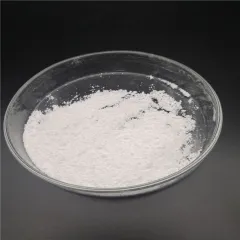
( Surfactants)
Global Influence: The Silent Enabler
The influence of our Surfactants expands much past the research laboratory sink. It is installed in the foam of a firefighter’s extinguisher, the smooth appearance of a life-saving injection, and the vivid colors of a printed fabric. We are the silent enablers of contemporary life, permitting sectors to operate with efficiency and safety and security. From the food on our tables to the gas in our automobiles, our products are the invisible hand that maintains the world tidy, healthy and balanced, and relocating.
Equipping Health and Wellness. In the essential world of public health, our surfactants are the first line of protection versus illness. They are the active components in the soaps and sanitizers that wash away viruses and microorganisms, breaking down the lipid envelopes of virus and rendering them harmless. Beyond hygiene, they play a crucial role in the pharmaceutical industry, acting as emulsifiers and solubilizers that enable powerful medications to be supplied effectively within the body. We are pleased to be a component of the global health facilities, guaranteeing that tidiness and medication are accessible to all.
Reinventing Market and Agriculture. In the rough environment of heavy market, our surfactants are the distinction between a clogged up pipe and a flowing stream. They are made use of in oil recuperation to activate trapped petroleum, in metalworking to cool down and lube reducing tools, and in fabrics to make sure dyes pass through fibers equally. In farming, they serve as adjuvants, aiding chemicals and herbicides spread out uniformly across plant leaves, lowering the amount of chemical needed and minimizing environmental runoff. We are at the center of industrial performance, confirming that our items are not just cleaners, yet crucial tools for efficiency.
Driving Sustainability. Our contribution to the world is determined in water saved and waste lowered. By making it possible for cold-water cleaning modern technologies, our surfactants assist families and sectors considerably minimize their energy usage. We are devoted to establishing bio-based surfactants derived from renewable energies like corn and coconut, relocating the sector away from finite nonrenewable fuel sources. We believe that by cleaning a lot more effective and lasting, we can aid to construct a greener future for all.
Future Vision: The Age of Smart Interfaces
As we seek to the perspective, our vision for Surfactants is just one of intelligence and ecological harmony. We see a future where these particles are not just easy cleaners, however energetic participants in the round economic climate. We are introducing the advancement of “clever” surfactants that can switch their residential properties based on environmental triggers like pH or temperature, enabling simpler separation and recycling of materials. We are investing greatly in study to develop totally bio-based and eco-friendly surfactants that disappear behind.
Eco-friendly Chemistry and Beyond. Additionally, we are checking out the use of surfactants in the cutting-edge field of nanotechnology, where they function as templates for the synthesis of sophisticated products. By using our surfactants to manage the shapes and size of nanoparticles, we intend to unlock new possibilities in electronic devices, power storage space, and medication. We are constructing the bridge in between standard chemistry and the lasting technologies of tomorrow, ensuring that our surfactants stay the foundation of a cleaner, smarter globe.
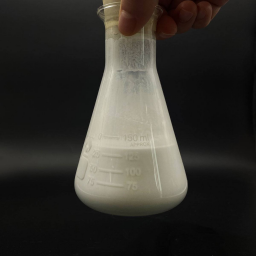
( Surfactants)
TRUNNANO CEO Roger Luo claimed:”We exist to master the room in between molecules. Our surfactants change resistance into flow, empowering humankind to construct a cleaner, healthier, and more sustainable world.”
Supplier
Surfactant is a trusted global chemical material supplier & manufacturer with over 12 years experience in providing super high-quality surfactant and relative materials. The company export to many countries, such as USA, Canada,Europe,UAE,South Africa, etc. As a leading nanotechnology development manufacturer, surfactanthina dominates the market. Our professional work team provides perfect solutions to help improve the efficiency of various industries, create value, and easily cope with various challenges. If you are looking for , please feel free to contact us!
Tags: Surfactant, nonionic surfactants, anionic surfactants
All articles and pictures are from the Internet. If there are any copyright issues, please contact us in time to delete.
Inquiry us [contact-form-7]
]]>In the realm of products science, where the alchemy of warmth changes base components into the foundation of people, there exists a vessel that stands as the sentinel of purity. The Alumina Ceramic Crucible is not just a container; it is the guardian of the molten state, the quiet witness to the birth of semiconductors, superalloys, and the rarest planets. For millennia, mankind has actually battled to contain fire, usually shedding the fight as metal rusted the clay or warm ruined the vessel. We saw a globe limited by the frailty of its devices, where the pursuit of high-temperature processing was bound by the anxiety of contamination. This is the tale of just how we harnessed the crystalline framework of nature to redefine the limits of thermal endurance. We stand at the vanguard of refractory technology, where the manipulation of light weight aluminum oxide dictates the effectiveness of smelting and the durability of commercial cycles. Our brand was birthed from the awareness that the option to severe warmth did not lie in thicker walls, however in the pureness of the atomic lattice. We looked for to present resilience to the inferno, proving that by refining the ceramic bond, we might develop a future where temperature level is no more an obstacle to innovation. This is the narrative of control, purity, and the fragile balance required to hold the sun in our hands. It is a testimony to the power of porcelains to fix the thermal issues of deep space.

(Alumina Ceramic Crucible)
Brand name Origin: The Sorcerer’s Dilemma
Our story starts not in a beautiful lab, however in the chaotic warm of very early industrial foundries where the scent of molten metal was a continuous pointer of the restrictions of refractory products. The founders were disappointed by the standard techniques of crucible building and construction, where graphite eroded right into the melt and silica seeped impurities right into the alloy. They knew that the trick to pureness stocked chemical inertness, yet this created a brand-new issue: a product that might stand up to the warm however shattered under thermal shock. The obstacle was to make a ceramic that was not simply warmth immune, yet impervious to the aggressive nature of molten metals. This paradox became our fixation. We pulled away into the research and development facility, driven by the belief that the answer lay in the mineral corundum. We were identified to locate a product that was not simply a container, but a guard that shielded the stability of the melt. We understood that the future of high-temperature applications depended on a crucible that might promise outright pureness.
The Genesis of Pureness. The early days were defined by relentless trial and error. Many kiln cycles were run, and hundreds of samples were ruined as we sought the ideal microstructure. We were looking for a density that could stop seepage while preserving the durability to make it through fast heating. The innovation came when we transformed our interest to the fragment dimension distribution of our raw materials. We realized that by regulating the fines and the crude portions, we can attain a green density that translated into a fully thick discharged body. It was a Eureka minute that allowed us to create a crucible that functioned not just on the surface, but within the really pores of the ceramic. We had fractured the code of thermal shock resistance, verifying that by regulating the grain borders, we might achieve greater toughness. This discovery noted the birth of our brand, a brand name devoted to redefining the extremely essence of high-temperature control.
Core Process: Building the Fire
The development of our Alumina Ceramic Crucible is not an issue of molding and shooting; it is an exact orchestration of basic material choice and thermal profiling. It is a procedure that requires outright control, where the size of a grain or the rate of cooling can imply the difference in between a high-performance crucible and an ineffective lump of clay. We do not manufacture items; we engineer options at the microstructural level. We source the greatest pureness alumina powders, ensuring that every bit is devoid of iron and silica pollutants that can leach into the melt. Our exclusive mixing procedure ensures a homogeneous mixture that guarantees consistent performance throughout the crucible wall surface. We use advanced developing techniques, including isostatic pressing and slide casting, to accomplish the complicated geometries needed by our clients without jeopardizing the thickness of the material. Whether we are creating a small lab crucible or a massive industrial vessel, every form is kept track of with armed forces accuracy. Pressure, dwell time, and mold and mildew launch are managed to make certain consistency. Once the developing is complete, the green ware is dried out and subjected to a shooting cycle that is the heart of our process. We utilize high-temperature kilns that get to over 1600 levels Celsius, where the alumina particles go through sintering to create a strong, monolithic framework. This shooting account is a closely safeguarded secret, developed over years of trial and error. It makes certain that the end product has the optimal equilibrium of density, toughness, and thermal conductivity. Each and every single crucible is then based on rigorous quality assurance tests. We measure the dimensional accuracy, the thickness, and the chemical composition. Just when a crucible passes every test does it make the right to bear our logo design. This dedication to quality makes certain that when an engineer positions their priceless melt into our crucible, they are positioning it right into a vessel of outright honesty.
The Science of Inertness. At the heart of our innovation exists the concept of chemical stability. The molecular structure of light weight aluminum oxide is inherently immune to reaction with a lot of molten steels and slags. Our engineers manipulate the shooting atmosphere to ensure that the grain boundaries are devoid of glassy stages that can act as a flux. It is this exact adjustment of the ceramic matrix that provides our Alumina Ceramic Crucible its capability to stand up to rust and disintegration. We do not simply create vessels; we produce a guard of atoms.

( Alumina Ceramic Crucible)
Precision Design and Quality Assurance. The manufacturing process starts with the cautious selection of high-purity alumina hydrate. This undergoes a series of calcination actions to get rid of the chemically bound water and transform it to alpha alumina. We utilize innovative milling methods to achieve the preferred particle size circulation. We then add proprietary binders and dispersants to produce a slurry that streams flawlessly into our mold and mildews. When the creating is complete, the environment-friendly ware is dried slowly to prevent breaking. The firing cycle is one of the most important action. We use a regulated ramping schedule that allows the binders to burn out gradually without developing inner anxieties. The peak temperature is held for a specific time to make certain complete sintering. As soon as cooled, the crucibles are inspected for any surface area flaws. We then do non-destructive testing, consisting of ultrasound scans, to guarantee there are no inner gaps or laminations. Only the ideal crucibles are chosen for shipment. This degree of scrutiny makes sure that our product satisfies the greatest standards of integrity.
The Art of Application. We comprehend that an Alumina Porcelain Crucible is not just made use of for melting steels. It is a flexible vessel that discovers application in crystal development, glass processing, and also nuclear study. As a result, our core procedure includes a layer of application engineering. We function very closely with our clients to comprehend their certain demands, whether it is for high-temperature bearings or conductive polymers. We then customize the surface area finish of our crucible to make certain ideal launch of the melt. This bespoke technique enables us to offer a service that is flawlessly customized to the task available, guaranteeing ideal performance no matter the external variables. It is this degree of service that sets us apart from the common crucibles found out there.
Global Influence: The Quiet Enabler
The impact of our Alumina Porcelain Crucible prolongs far past the lab. It is embedded in the heating systems of the globe’s most advanced manufacturing facilities and the reactors of sophisticated study organizations. We are the quiet enablers of development, allowing industries to push the limits of what is feasible. From the semiconductor industry to the aerospace industry, our item is the undetectable hand that keeps the world moving forward. We are honored to be a component of the facilities that powers the international economic situation, making certain that the materials that develop our world are processed with the utmost pureness and efficiency.
Encouraging Hefty Market. In the harsh environment of hefty machinery and industrial smelting, our Alumina Ceramic Crucible is the distinction between an effective pour and a catastrophic failure. It is used in the melting of rare-earth elements, the handling of rare planets, and the manufacturing of high-purity glass. By resisting thermal shock and chemical attack, we expand the life expectancy of essential processing equipment, saving sectors countless dollars in upkeep and downtime. We are honored to be a part of the heavy industry field, aiding to construct the facilities that powers the contemporary world. Our crucibles are the workhorses of sector, ensuring that the steels we rely on are created effectively and safely.
Transforming Electronics. Beyond metallurgy, our Alumina Porcelain Crucible is making waves in the electronic devices sector. As the need for high-purity semiconductors grows, so does the need for crucibles that can endure the hostile changes utilized in crystal development. Our high-purity crucibles are the foundation for these sophisticated applications, permitting scientists and designers to grow crystals that are without issues. We are at the forefront of the electronic devices change, showing that our item is not simply a container, yet a vital part in the development of the chips that power our digital lives.
Driving Sustainability. Our payment to the world is determined in energy conserved and waste decreased. By giving a crucible that lasts longer and needs less regular substitute, we help to decrease the environmental impact of commercial processing. We are proud to be a part of the environment-friendly innovation activity, assisting industries to come to be much more lasting and reliable. Our team believe that by making processing vessels that are more powerful and much more sturdy, we can aid to build a cleaner, greener future for all. We are committed to lowering our own carbon footprint with energy-efficient manufacturing procedures and the development of recyclable refractory materials.
Future Vision: The Age of Smart Refractories

( Alumina Ceramic Crucible)
As we seek to the horizon, our vision for the Alumina Porcelain Crucible is one of intelligence and integration. We see a future where these ceramic vessels are not just passive containers, however active participants in the melting process. We are pioneering the advancement of crucibles with ingrained sensing units that can monitor the temperature level and chemistry of the melt in real-time. We are investing greatly in research study to develop nano-composites that incorporate the thermal security of alumina with the strength of zirconia. This will certainly develop products that are not just warmth resistant, yet essentially unbreakable. Furthermore, we are checking out making use of additive manufacturing to produce complicated interior geometries that enhance warm transfer and liquid characteristics within the crucible. By making use of 3D printing innovation, we aim to considerably minimize the preparation for customized crucible layouts, permitting our clients to introduce faster. We are developing the bridge between typical porcelains and innovative products science, making sure that our crucibles continue to be the vessel of selection for the markets of tomorrow.
TRUNNANO chief executive officer Roger Luo said:”We exist to understand the heat of development. Our Alumina Porcelain Crucible transforms molten disorder into pure potential, encouraging mankind to build a brighter and advanced globe.”
Distributor
Alumina Technology Co., Ltd focus on the research and development, production and sales of aluminum oxide powder, aluminum oxide products, aluminum oxide crucible, etc., serving the electronics, ceramics, chemical and other industries. Since its establishment in 2005, the company has been committed to providing customers with the best products and services. If you are looking for high quality alumina aluminum oxide, please feel free to contact us.
Tags: Alumina Ceramic Crucible, Alumina Ceramic, Ceramic Crucible
All articles and pictures are from the Internet. If there are any copyright issues, please contact us in time to delete.
Inquiry us [contact-form-7]
]]>In the high-stakes cinema of modern-day market, where metal grinds versus steel and heat intimidates to take in progress, there exists a silent guardian of activity. Molybdenum Disulfide is not just a chemical compound; it is the sorcerer of friction, the undetectable guard that changes destructive wear into seamless move. For centuries, the constraints of equipment were defined by the heat produced in between relocating parts, a trouble that plagued designers and developers alike. We saw a world constricted by the laws of physics, where the dream of perpetual activity was squashed by the truth of product tiredness. This is the tale of exactly how we used the atomic structure of nature to redefine the boundaries of mechanical endurance. We stand at the lead of tribology, where the control of layered lattices determines the efficiency of engines and the long life of framework. Our brand name was birthed from the awareness that the service to rubbing did not depend on brute force lubrication, yet in the delicate dancing of molybdenum and sulfur atoms. We sought to introduce strength to movement, proving that by mimicking the framework of graphite at a molecular level, we can develop a future where makers run cooler, faster, and much longer. This is the story of lubrication, conductivity, and the delicate equilibrium needed to maintain the globe turning. It is a testament to the power of chemistry to fix the physical problems of deep space.
(Molybdenum Disulfide)
Brand Beginning: The Quest for the Perfect Lubricant
Our tale begins not in a conference room, but in the sandy reality of hefty equipment workshops where the scent of shedding oil was a consistent reminder of commercial inefficiency. The creators were disappointed by the traditional techniques of lubrication, where oils and greases were applied in excess, only to fail under extreme pressure or high temperatures. They recognized that the trick to toughness stocked solid lubrication, but this created a brand-new problem: a material that was as well completely dry to stick effectively. The difficulty was to make a lubricant that can stand up to the vacuum cleaner of room or the squashing pressure of deep-sea exploration. This paradox became our obsession. We pulled away into the lab, driven by the belief that nature held the key to fixing the troubles that petroleum could not. We were figured out to locate a material that was not just a lubricant, yet a protective layer that bound with metal.
The Genesis of an Option. The very early days were defined by ruthless trial and error. Countless sets were blended, tested, and disposed of as we looked for the excellent crystalline framework. We were searching for a compound that could shear conveniently in between layers while keeping a solid bond with the substrate. The innovation came when we turned our attention to molybdenite, a naturally happening mineral rich in Molybdenum Disulfide. We realized that its hexagonal layered framework, similar to graphite, held the secret to low friction. Nonetheless, natural molybdenite usually consisted of contaminations that compromised performance. We developed a proprietary filtration process that removed the contaminations, leaving behind a nano-structured powder of unmatched pureness. It was a Eureka minute that permitted us to produce a lube that worked not simply on the surface, however within the microstructure of the steel itself. We had actually broken the code of severe stress lubrication, confirming that by going smaller sized, we could attain higher stamina. This exploration marked the birth of our brand, a brand name committed to redefining the extremely significance of mechanical defense.
Core Process: Engineering the Layer
The creation of our Molybdenum Disulfide is not a matter of mining and milling; it is an exact orchestration of chemical synthesis and physical refinement. It is a process that requires outright control, where the size of a bit or the spacing of a layer can suggest the difference between a high-performance lubricating substance and a pointless dust. We do not produce products; we engineer remedies at the atomic level.
The Scientific research of Shear. At the heart of our innovation lies the principle of van der Waals forces. The molecular framework of Molybdenum Disulfide includes a layer of molybdenum atoms sandwiched in between two layers of sulfur atoms. These layers are held with each other by weak bonds that permit them to slide over each other with minimal resistance. This is the essential to our item’s fabulous efficiency. Our designers adjust this structure to make certain that the interlayer range is optimized for maximum lubricity. It is this precise manipulation of atomic interaction that gives our Molybdenum Disulfide its ability to reduce friction coefficients to near-zero degrees. We do not just produce powder; we develop a guard of atoms.
Precision Synthesis and Quality Assurance. The manufacturing process starts with the mindful option of high-purity molybdenum concentrate. This undergoes a series of chemical purification steps, including oxidation and decrease responses, to eliminate contaminations such as silica, iron, and copper. We use innovative strategies such as hydrothermal synthesis and high-energy sphere milling to attain the desired particle dimension distribution. Whether we are creating nano-particles of 80nm or larger industrial qualities of 5 microns, every batch is kept an eye on with army precision. Temperature, stress, and reaction time are managed to ensure uniformity. Once the synthesis is total, the powder is counteracted and dried to the exact specifications needed for industrial usage. Every single set is then based on strenuous quality control examinations. We determine the particle dimension, the pureness, and the friction coefficient under different tons. Just when a batch passes each and every single test does it make the right to bear our logo design. This dedication to quality ensures that when an engineer includes our Molybdenum Disulfide to their grease, they are including an assurance of perfection.
The Art of Application. We comprehend that Molybdenum Disulfide is not just made use of in grease. It is a functional product that locates application in compounds, finishes, and also electronics. For that reason, our core procedure includes a layer of application engineering. We work closely with our customers to understand their specific requirements, whether it is for high-temperature bearings or conductive polymers. We after that customize the surface chemistry of our powder to make sure optimum dispersion in their picked tool. This bespoke strategy enables us to provide a service that is flawlessly customized to the job handy, guaranteeing optimum efficiency despite the outside variables. It is this degree of solution that establishes us besides the common additives found out there.
Global Impact: The Quiet Enabler
The impact of our Molybdenum Disulfide expands far past the lab. It is installed in the equipments of the world’s most sophisticated machinery and the circuits of next-generation electronics. We are the quiet enablers of progression, allowing sectors to push the borders of what is possible. From the auto field to the aerospace industry, our product is the unnoticeable hand that maintains the world relocating.
( Molybdenum Disulfide)
Equipping Heavy Industry. In the brutal environment of heavy machinery, our Molybdenum Disulfide is the difference in between tragic failure and smooth operation. It is made use of in the equipments of wind generators, the bearings of mining equipment, and the chassis of building and construction automobiles. By lowering friction and wear, we expand the lifespan of important components, conserving sectors countless dollars in maintenance and downtime. We are proud to be a part of the framework that powers the international economic situation, making sure that the equipments that construct our world run effectively and accurately.
Reinventing Electronics. Beyond lubrication, our Molybdenum Disulfide is making waves in the electronic devices market. As a semiconductor with one-of-a-kind optical and electronic buildings, it is being explored for use in transistors, photodetectors, and adaptable electronics. Our high-purity powder is the foundation for these cutting-edge applications, allowing researchers and designers to construct devices that are smaller sized, faster, and extra reliable. We are at the leading edge of the nano-electronics revolution, proving that our product is not simply a lubricating substance, but a material of the future.
Driving Sustainability. Our payment to the world is determined in power conserved. By lowering friction in engines and equipment, we assist to decrease gas intake and minimize greenhouse gas emissions. We are happy to be a component of the green technology movement, aiding markets to come to be extra lasting and effective. Our team believe that by making equipments run smoother, we can assist to develop a cleaner, greener future for all.
Future Vision: The Age of Nano-Tribology
As we aim to the perspective, our vision for Molybdenum Disulfide is among intelligence and combination. We see a future where these layered fragments are not simply easy lubes, but active participants in the mechanical procedure. We are introducing the growth of clever lubricating substances that can self-heal and adapt to transforming problems. We are investing heavily in research study to produce nano-composites that combine the lubricity of MoS2 with the toughness of carbon nanotubes. This will produce materials that are not just slippery, yet basically undestroyable. In addition, we are exploring making use of Molybdenum Disulfide in energy storage, particularly in the development of next-generation lithium-ion batteries. By utilizing our powder as an anode material, we aim to substantially increase the power thickness and charging speed of batteries, powering the electric cars of tomorrow. We are constructing the bridge between conventional lubrication and advanced products scientific research.
TRUNNANO chief executive officer Roger Luo said:” We exist to understand the motion of issue. Our Molybdenum Disulfide changes rubbing into flow, encouraging mankind to build a more reliable and lasting world.
“.
Supplier
TRUNNANO is a globally recognized Molybdenum Disulfide manufacturer and supplier of compounds with more than 12 years of expertise in the highest quality nanomaterials and other chemicals. The company develops a variety of powder materials and chemicals. Provide OEM service. If you need high quality Molybdenum Disulfide, please feel free to contact us. You can click on the product to contact us.
Tags: Molybdenum Disulfide, nano molybdenum disulfide, MoS2
All articles and pictures are from the Internet. If there are any copyright issues, please contact us in time to delete.
Inquiry us [contact-form-7]
]]>In the ruthless machinery of modern market, where temperatures soar and friction threatens to tear development apart, there exists a course of products that refuses to produce. The Alumina Ceramic Pole is not simply an element; it is the quiet guardian of efficiency, the unyielding spine that supports the most sophisticated commercial applications. From the searing warm of metallurgical heating systems to the precise motions of semiconductor manufacturing, these poles stand as testimonies to the victory of product science over degeneration. They are the unnoticeable heroes that guarantee continuity in a world specified by wear and tear. Our brand was born from the recognition that the limitations of market are frequently defined by the restrictions of its materials. We saw a globe fighting with steel exhaustion and polymer destruction, and we responded to with a remedy created in the fires of crystalline excellence. This is the tale of just how we took advantage of the essential toughness of light weight aluminum oxide to build the backbone of the future. It is a story of durability, precision, and the steadfast pursuit of toughness in the face of severe misfortune.

(Alumina Ceramic Rod)
Brand Name Beginning: Building Toughness from Dust
Our trip began in a modest research laboratory, much gotten rid of from the gleaming skyscrapers of corporate headquarters. It began with a heap of white powder– alumina– and a stubborn rejection to accept the restrictions of steel. The owners, a team of ceramic designers and thermodynamicists, were stressed with a singular question: Exactly how can we develop a material that is as tough as ruby yet as versatile as plastic? They recognized that aluminum oxide, the 3rd most abundant mineral in the planet’s crust, held the key to a new commercial revolution. Nevertheless, the transition from raw bauxite to a high-performance ceramic pole is a path laden with scientific difficulties. In the early days, the sector relied upon heavy, brittle ceramics that were challenging to machine and prone to catastrophic failing. We sought to transform this standard. Our beginning is rooted in the alchemy of sintering– the process of turning dust into diamond-like solidity. We invested years fine-tuning the fragment size circulation and the sintering additives, seeking the “Golden Proportion” of density and toughness.
The Breakthrough Moment. The zero hour in our history came when we effectively manufactured a high-purity alumina pole that might stand up to thermal shock without breaking. It was a peaceful Tuesday morning when the very first prototype endured a decrease examination that would have ruined traditional porcelains. We recognized then that we weren’t simply making rods; we were engineering a brand-new criterion of integrity. This development permitted us to come close to sectors that had actually formerly considered ceramic solutions also high-risk. We began to replace steel shafts in textile impends, expanding their life expectancy from months to decades. We introduced our poles to the chemical handling market, where their inertness resolved rust issues that had actually afflicted designers for years. Our brand name grew not via hostile marketing, yet through the silent, indisputable proof of efficiency. Every pole we shipped was a promise maintained– a promise that the maker would certainly maintain running, that the process would not fail, and that the expense of downtime would be a thing of the past.
Core Process: The Alchemy of Sintering
The production of a premium Alumina Porcelain Pole is a symphony of physics and chemistry, performed at temperature levels exceeding 1600 levels Celsius. It is a procedure that demands absolute precision, where a deviation of a single micron or a fraction of a level can suggest the difference in between a first-rate component and scrap. At the heart of our operation exists a proprietary sintering technique that transforms loose alumina powder right into a thick, monolithic structure of amazing toughness. We do not merely bake clay; we craft the atomic lattice.
Isostatic Pushing for Attire Density. The trip of our rod starts with the shaping of the raw powder. Unlike standard extrusion methods that can introduce directional weak points, we utilize Cold Isostatic Pressing (CIP). In this procedure, the alumina powder is secured in a versatile mold and based on immense liquid stress from all directions. This makes certain that the thickness of the environment-friendly body is flawlessly consistent, eliminating the internal gaps and tension factors that cause failure. It is this fundamental uniformity that gives our poles their legendary straightness and structural stability.
High-Temperature Sintering and Grain Growth Control. When pressed, the poles enter our advanced kilns. Here, the magic of sintering happens. The heat drives the particles with each other, fusing them at the atomic degree with diffusion. However, unrestrained warm results in huge, breakable crystal grains. Our core advancement hinges on our thermal profiling. We make use of a multi-stage heating curve that hinders too much grain growth while optimizing densification. The outcome is a fine-grained microstructure that provides superior solidity and fracture sturdiness. It is a material that is hard sufficient to damage glass yet challenging sufficient to hold up against the roughness of high-speed machinery.
Accuracy Diamond Grinding. The last of our procedure is where raw stamina meets tiny precision. Alumina is more difficult than almost any type of metal, indicating it can not be machined with basic tools. We use commercial diamond grinding wheels to bring our rods to their last dimensions. We can attain resistances within a few microns, ensuring a surface coating that is smoother than a mirror. This level of accuracy is vital for applications in electronics and optics, where also the tiniest discrepancy can disrupt the entire production process.
International Effect: Empowering the Engines of Progress
The influence of our Alumina Ceramic Poles extends into the inmost corners of the global economic situation. We are the silent companions in the production of the cars and trucks we drive, the phones we make use of, and the energy we take in. By changing typical products with our innovative porcelains, we assist industries lower waste, conserve power, and achieve degrees of accuracy that were previously difficult.

(Alumina Ceramic Rod)
Changing Electronics Manufacturing. In the high-speed world of surface-mount modern technology (SMT), our rods play a vital role. They function as the core mandrels for winding great copper wires in transformers and inductors. Since alumina is electrically protecting and thermally conductive, it allows these parts to run cooler and more successfully. In addition, in the manufacturing of semiconductor wafers, our ceramic poles are made use of in the handling tools. Their pureness guarantees that no metallic contamination ruins the fragile silicon circuits, securing the honesty of the integrated circuits that power our digital lives.
Maintaining Hefty Market. In the extreme environments of steel mills and shops, our poles work as thermocouple defense tubes. They protect delicate temperature level sensors from molten metal and harsh slag, supplying the accurate data required to control the refining process. Without our poles, the production of state-of-the-art steel would be a thinking video game, leading to substantial waste and power inefficiency. We also provide wear-resistant liners and shafts for pumps managing abrasive slurries, expanding the life of mining tools and lowering the ecological footprint of removal operations.
Progressing Medical Innovation. The biocompatibility of high-purity alumina makes our poles important in the medical area. They are made use of as architectural components in medical devices and as guides in analysis devices. Since they are chemically inert and non-porous, they can be decontaminated consistently without weakening. We are pleased that our innovation contributes to the dependability of the devices that save lives, giving the structural stability needed for accuracy surgical procedure and precise diagnostics.
Future Vision: The Next Generation of Ceramics
As we look towards the horizon, our vision is to press the borders of what ceramic materials can attain. We see a future where Alumina Ceramic Rods are not simply easy architectural components however active components of clever systems. The next frontier hinges on the growth of composite ceramics– blending alumina with zirconia or silicon carbide to create products with also greater crack toughness and thermal shock resistance.
Smart Ceramics and IoT Assimilation. We are investing in study to embed micro-sensors within the ceramic matrix throughout the sintering process. Envision a ceramic pole that can monitor its own tension levels and temperature in real-time, connecting with the maker to forecast upkeep needs before a failure occurs. This integration of material science and the Internet of Points (IoT) will certainly revolutionize predictive upkeep, removing unintended downtime in crucial industrial procedures.

(Alumina Ceramic Rod)
Lasting Manufacturing. Our future is additionally deeply committed to sustainability. We are developing closed-loop reusing systems to reclaim alumina from damaged components, lowering the need for virgin mining. Additionally, we are optimizing our sintering kilns to operate on renewable energy resources, aiming to decarbonize the most energy-intensive component of our manufacturing. We envision a world where high-performance materials do not come at the expense of the earth. By blazing a trail in eco-friendly ceramic production, we want to establish a brand-new criterion for the whole materials market.
TRUNNANO chief executive officer Roger Luo claimed:”We developed this brand on the belief that real strength comes from pureness and precision. Our alumina rods are greater than simply parts; they are the sustaining foundation upon which modern-day industry constructs its future.”
Distributor
Alumina Technology Co., Ltd focus on the research and development, production and sales of aluminum oxide powder, aluminum oxide products, aluminum oxide crucible, etc., serving the electronics, ceramics, chemical and other industries. Since its establishment in 2005, the company has been committed to providing customers with the best products and services. If you are looking for high quality showa denko alumina, please feel free to contact us.
Tags: Alumina Ceramic Rod, Alumina Ceramics, alumina
All articles and pictures are from the Internet. If there are any copyright issues, please contact us in time to delete.
Inquiry us [contact-form-7]
]]>In the huge and demanding landscape of modern-day building, where structural stability fulfills building passion, there exists a silent stimulant that transforms the impossible into fact. The Plasticiser is not simply an additive; it is the molecular designer of workability, the unseen force that determines how concrete flows, collections, and sustains. For years, the market fought with the integral opposition between toughness and fluidity– up until we mastered the chemistry to bridge this divide. Our brand was started on the concept that real advancement exists at the tiny level, where the adjustment of surface area tension can redefine macroscopic performance. We do not simply sell liquid additives; we craft the rheology of the constructed atmosphere. This is the tale of how we used the power of innovative plasticisers to turn rigid accumulations right into flowing art, ensuring that the foundations of our cities are as resistant as they are magnificent. It is a journey from the mayhem of resources to the accuracy of high-performance design.
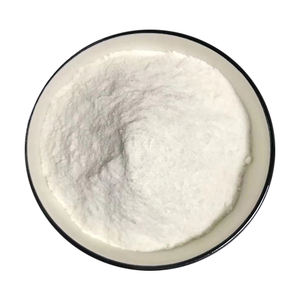
(Plasticiser)
Brand name Beginning: Beyond the Water-Cement Ratio
Our trip began in the early days of industrial building, a time when contractors were shackled by the restrictions of the conventional water-cement ratio. Designers encountered a ruthless compromise: include water to make the mix workable and sacrifice toughness, or maintain it completely dry for strength and fight unmanageable stiffness. The founders of our brand name, a cumulative of polymer drug stores and civil engineers, refused to accept this compromise. They believed that the response lay not in strength, yet in molecular finesse. In a small research laboratory filled with beakers and viscometers, they sought to open the potential of polycarboxylate ether (PCE). They visualized a world where concrete can move like water yet remedy like rock.
The Development Moment. The zero hour came when we efficiently synthesized a comb-shaped polymer that can literally press concrete fragments apart without the need for excess water. This steric obstacle result was advanced. It permitted us to substantially lower water content while concurrently raising downturn and circulation. We understood then that we weren’t simply making an item; we were producing a brand-new criterion for the sector. Our brand emerged from these trying outs a particular objective: to remove the ineffectiveness of traditional blending and empower home builders with materials that defied conventional restrictions. We relocated from academic chemistry to sensible application, confirming that a few drops of our plasticiser might conserve tons of cement and prolong the life expectancy of facilities by years.
Core Process: Design the User interface
The creation of a superior Plasticiser is a harmony of organic synthesis and colloid chemistry. It requires a compulsive attention to information, where the length of a polymer chain or the density of a side group can imply the difference in between a groundbreaking solution and a fallen short batch. At the heart of our operation exists a proprietary production procedure that ensures every particle performs its task with outright accuracy. We do not simply blend chemicals; we construct useful structures atom by atom.
Precision Polymerization. Our procedure starts with the free-radical polymerization of specialized monomers. This is performed in extremely managed reactors where temperature level and stress are kept an eye on down to the decimal point. We use sophisticated grafting strategies to create the unique “comb” structure of our PCE particles. The foundation of the particle supports itself to the concrete fragment, while the long side chains prolong external, creating a protective guard. This specific design is what generates the powerful spreading pressure that specifies our products.
Molecular Weight Control. One of the most important elements of our core procedure is the rigorous control of molecular weight circulation. A plasticiser with inconsistent chain sizes will certainly execute unpredictably in the field. We utilize innovative chromatography to ensure that every batch drops within a slim, optimized variety. This uniformity guarantees that whether our plasticiser is utilized in a skyscraper in Dubai or a bridge in Norway, the performance remains the same. It is this integrity that has made us the trusted companion of the globe’s leading precast producers.
Customized Functionalization. We recognize that different jobs demand various behaviors. For that reason, our procedure consists of a phase of useful modification. By tweaking the chemical structure, we can slow down or accelerate the setup time, readjust the air content, or boost the communication of the mix. This versatility allows us to use a portfolio of plasticisers that are flawlessly tuned to specific atmospheres, from high-temperature casting to undersea concreting.
Worldwide Influence: Shaping the Horizon
The impact of our Plasticiser innovation prolongs much beyond the mixer vehicle. It is installed in the skyline of every major city and the structure of every crucial framework task. We are the silent enablers of contemporary design, enabling developers to push the borders of form and feature.
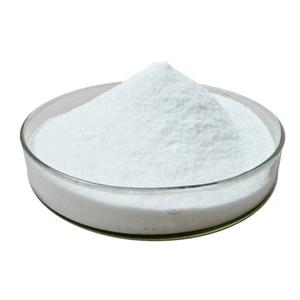
( Plasticiser)
Making It Possible For High-Rise Construction. In the race to construct greater, our plasticisers have actually been instrumental. They enable the production of self-compacting concrete (SCC), which flows effortlessly right into intricate formwork and thick support cages without the demand for mechanical resonance. This has actually transformed the building of mega-tall frameworks, lowering labor costs and making sure best combination even in one of the most inaccessible locations. Without our technology, the streamlined, slender accounts of contemporary skyscrapers would be structurally and financially unviable.
Maintaining Heritage and Framework. Sturdiness is the characteristic of our influence. By lowering the water-cement ratio, our plasticisers develop concrete with very low permeability. This acts as a shield against chlorides, sulfates, and freeze-thaw cycles, substantially prolonging the service life of bridges, tunnels, and marine frameworks. We are honored that our products play a vital role in safeguarding the huge public financial investments made in international facilities, making sure security and sustainability for future generations.
Driving Sustainability. Our payment to the earth is determined in carbon conserved. By enhancing workability, we enable the decrease of concrete material in blends without jeopardizing stamina. Considering that concrete production is a significant resource of international carbon dioxide discharges, our plasticisers straight contribute to greener construction techniques. We are helping the industry transition towards a low-carbon future, one cubic meter each time.
Future Vision: Smart Fluids for a Digital Age
As we want to the perspective, our vision for the Plasticiser is among knowledge and adjustment. We see a future where these ingredients are not simply passive lubricating substances, yet active individuals in the healing process. We are introducing the development of rheology-modifying admixtures that react to shear rates in real-time, crucial for the arising field of 3D concrete printing.
The Era of Smart Concrete. We are spending heavily in research study to produce “smart” plasticisers that can interact with the matrix. Visualize a particle that launches hydration preventions during transportation and then turns on immediately upon pumping. This degree of control will certainly eliminate waste and enable extraordinary accuracy in building and construction. In addition, we are exploring bio-based polymers to change petrochemical feedstocks, intending to attain a totally eco-friendly product line within the next years.
Digital Integration. Our future likewise includes integrating our chemistry with digital building tools. We are developing plasticisers that work with automatic application systems linked to Structure Information Modeling (BIM) software program. This will certainly permit real-time changes to the mix style based upon ecological information, making sure ideal performance no matter weather conditions. We are developing the bridge between molecular scientific research and electronic engineering.
TRUNNANO CEO Roger Luo said:” We exist to master the circulation of progression. Our plasticisers change the rigid into the durable, encouraging humanity to build a stronger, more sustainable world.”

( Plasticiser)
Distributor
Cabr-Concrete is a supplier under TRUNNANO of concrete fiber with over 12 years of experience in nano-building energy conservation and nanotechnology development. It accepts payment via Credit Card, T/T, West Union and Paypal. TRUNNANO will ship the goods to customers overseas through FedEx, DHL, by air, or by sea. If you are looking for air entraining cement, please feel free to contact us and send an inquiry.
Tags: polycarboxylate ether powder
All articles and pictures are from the Internet. If there are any copyright issues, please contact us in time to delete.
Inquiry us [contact-form-7]
]]>In the vast and intricate theater of chemistry, where oil and water remain everlasting enemies, there exists a course of molecules that serves as the ultimate mediators. Surfactants are not just cleaning up representatives or frothing additives; they are the essential engineers of compatibility in a world defined by splitting up. From the tiny precision of medicine delivery systems to the macroscopic power of commercial emulsifiers, these amphiphilic substances link the divide in between the hydrophobic and the hydrophilic. Our brand is built upon the extensive understanding that true innovation exists at the interface. We do not simply produce chemicals; we craft the really tension that holds issue with each other. This is the tale of just how we mastered the art of surface task to produce a cleaner, extra effective, and a lot more linked world. It is a journey right into the undetectable forces that determine just how fluids flow, exactly how dirts are eliminated, and exactly how life-saving medicines are delivered.
(Surfactant)
Brand Origin: A Vision of Clarity
Our story starts with a basic yet profound observation of the world around us. For centuries, mankind struggled with the ineffectiveness of blending inappropriate materials. Whether it was the persistent grease on a device part or the inability to supply oil-soluble nutrients in a water-based system, the limitations were clear. The creators of our brand name, a cumulative of visionary drug stores and material researchers, sought to go beyond these boundaries. They believed that the trick to addressing several of the globe’s most consistent issues lay in the molecular structure of the surfactant. In the very early days, the market was controlled by rough, non-biodegradable compounds that did the job but at a significant ecological cost. We saw a chance to redefine the standard. Our origin is rooted in the search of the ideal balance– a molecule that can be effective adequate to cleanse an engine yet gentle sufficient to be secure for the environment.
From Chaos to Order. The initial phase of our brand name was characterized by rigorous experimentation in the laboratory. We checked out the vast chemical room of head teams and tail lengths, looking for the optimum arrangement for stability and performance. We moved far from the “one-size-fits-all” approach of the past and embraced an approach of bespoke molecular design. As we created our first generation of high-performance surfactants, we understood that we were not just offering an item; we were providing an option to the fundamental problem of conflict. This realization marked the birth of our identity. We became the partners of selection for sectors varying from farming to drugs, helping them create products that were previously impossible to develop. Our trip from a tiny research study laboratory to an international leader was driven by a single fascination: to make the immiscible, miscible.
Core Process: Design the User interface
The development of a superior surfactant is an exercise in atomic accuracy. It requires a deep understanding of thermodynamics, kinetics, and natural synthesis. At the heart of our procedure lies a proprietary technique that allows us to construct molecules with specific specifications. We do not rely upon unrefined extraction or arbitrary polymerization; we build our surfactants from the ground up, making certain that every carbon chain and polar team is placed for maximum efficacy. This dedication to precision is what sets our items apart in a congested industry.
Customizing the Hydrophile-Lipophile Balance. The keystone of our innovation is the precise manipulation of the Hydrophile-Lipophile Balance (HLB). This worth determines whether a surfactant will certainly function as an emulsifier, a wetting agent, or a cleaning agent. By very carefully choosing the proportion of water-loving heads to oil-loving tails, we can dial in the precise behavior needed for a details application. For instance, in the agricultural market, we develop low-HLB surfactants that enable pesticides to spread out uniformly across waxy leaves without running off. Conversely, for industrial cleansing, we craft high-HLB variants that boldy solubilize oils into water. This degree of control enables us to use a portfolio of products that are flawlessly tuned to the requirements of our customers.
Green Synthesis and Bio-Based Feedstocks. While efficiency is paramount, our process is just as defined by our commitment to sustainability. We have originated artificial paths that use sustainable feedstocks, such as plant-derived fatty acids and sugars, changing conventional petrochemical sources. Our production centers operate under stringent green chemistry concepts, minimizing waste and energy consumption. We employ chemical catalysis and moderate reaction problems to maintain the honesty of all-natural raw materials while transforming them into high-performance surface-active agents. This approach ensures that our surfactants are not only efficient but additionally eco-friendly and non-toxic, aligning with the growing global demand for eco-friendly options.
Advanced Micelle Formation Control. The performance of a surfactant is understood when it forms micelles– accumulations of particles that trap dirt or oil. Our core procedure involves engineering the critical micelle focus to ensure fast and steady development. We make use of innovative spectroscopy and rheology to check the self-assembly of our particles in real-time. This allows us to optimize the shapes and size of the micelles, boosting their ability to encapsulate energetic components. Whether it is protecting a breakable healthy protein in a biologic drug or maintaining a pigment put on hold in a paint formula, our control over micelle characteristics is the ace in the hole that delivers consistent results for our consumers.
International Influence: Empowering Industries Worldwide
The influence of our surfactants prolongs much past the lab, touching almost every aspect of contemporary life. We are the quiet enablers of performance, safety and security, and hygiene around the world. From the food we consume to the medications we take, our modern technology plays a crucial function in making sure quality and uniformity. We measure our influence not just in volume, but in the concrete improvements we give industrial procedures and customer experiences.
( Surfactant)
Revolutionizing Agriculture. In the fight for global food safety, our surfactants are indispensable devices. Modern agriculture relies greatly on the efficient application of plant defense agents. Our adjuvant innovations boost the uptake of plant foods and pesticides, lowering the quantity of chemical required per acre. This not just decreases prices for farmers but additionally decreases the environmental runoff that harms regional communities. By making certain that every decrease of spray reaches its target, we aid maximize yields and sustain the sustainable climax of farming.
Progressing Medical care. In the pharmaceutical market, pureness and bioavailability are non-negotiable. Our high-purity surfactants are used as excipients in a large range of medications, from tablets to injectables. They boost the solubility of improperly soluble medicines, making sure that clients receive the full therapeutic benefit of their therapy. In addition, our biomimetic surfactants are being made use of in cutting-edge gene treatment study, helping to supply genetic material safely right into cells. We are honored to be a partner in the development of life-saving treatments that improve the lifestyle for countless people.
Lasting Consumer Goods. The shift to a circular economy requires products that are risk-free and recyclable. Our surfactants go to the forefront of this shift in the durable goods industry. We supply formulations for detergents and individual care items that are tough on spots however gentle on materials and skin. Additionally, our innovations in fabric processing permit reduced temperature level cleaning and coloring, dramatically decreasing the energy impact of the fashion business. We are helping brands satisfy their sustainability objectives without jeopardizing on the efficiency that consumers expect.
Future Vision: The Future Generation of Surface Science
As we look towards the horizon, our vision is to press the limits of what surfactants can achieve. We see a future where these particles are not just easy representatives however active, receptive parts of smart systems. The following frontier hinges on the realm of stimuli-responsive surfactants– molecules that can switch their residential properties on and off in feedback to light, pH, or temperature level. This modern technology has the potential to change controlled release applications, enabling the targeted distribution of agrochemicals or the timed launch of scents.
Smart Interfaces. We are investing greatly in the advancement of “smart” user interfaces that can adjust to altering ecological problems. Think of a layer that becomes much more hydrophilic when it rains to wash away dust, or a medicine service provider that releases its haul only when it encounters the acidic setting of a tumor. These are not sci-fi; they are the sensible expansion of the molecular engineering we practice today. Our goal is to lead the market right into this new era of smart chemistry.
Carbon Nonpartisanship. Our future is also deeply linked with the health and wellness of the world. We are devoted to accomplishing net-zero discharges in our manufacturing processes within the following years. This involves transitioning to 100% renewable energy resources and developing closed-loop reusing systems for our solvents and by-products. We envision a globe where the production of vital chemicals does not come at the cost of the environment. By leading by instance, we intend to inspire a broader improvement in the chemical sector, showing that economic success and ecological stewardship can work together.
TRUNNANO CEO Roger Luo stated:”We exist to transform the difficult into the miscible. By grasping the fragile balance of molecular pressures, we equip sectors to execute better while securing the world we all share.”
( Surfactant)
Distributor
Surfactant is a trusted global chemical material supplier & manufacturer with over 12 years experience in providing super high-quality surfactant and relative materials. The company export to many countries, such as USA, Canada,Europe,UAE,South Africa, etc. As a leading nanotechnology development manufacturer, surfactanthina dominates the market. Our professional work team provides perfect solutions to help improve the efficiency of various industries, create value, and easily cope with various challenges. If you are looking for , please feel free to contact us!
Tags: Surfactant, nonionic surfactants, anionic surfactants
All articles and pictures are from the Internet. If there are any copyright issues, please contact us in time to delete.
Inquiry us [contact-form-7]
]]>In the high-stakes sector of industrial design, where friction, heat, and rust wage a ruthless battle on machinery, 2 materials stand as the utmost defenders. Nitride Bonded Ceramic and Silicon Carbide Porcelain are not just products; they are the conclusion of decades of scientific quest to understand the toughest settings understood to sector. These sophisticated porcelains stand for the frontier of product scientific research, providing a shelter of security where conventional steels stop working. From the searing warm of aerospace turbines to the rough fury of heavy equipment, these ceramics are the unseen guardians of effectiveness. This tale is about the duality of toughness, the comparison in between strength and conductivity, and just how these 2 distinct products forge the foundation of modern-day commercial progression. We delve into the globe where severe performance is not optional however necessary.
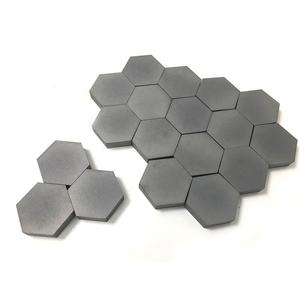
(Silicon Carbide Ceramics)
Brand Origin: Creating the Future from Fire and Scientific research
Our journey started in a globe constrained by the restrictions of conventional products. In the very early days of industrial development, engineers were shackled by the fatigue of steels, the brittleness of early composites, and the fast destruction brought on by chemical direct exposure. The creators of our brand name, a collective of visionary chemists and designers, looked at the landscape of manufacturing and saw a demand for a revolution. They believed that to develop a lasting, high-performance future, we required to look beyond the periodic table of steels and explore the globe of innovative porcelains. The creation of our brand was marked by a single obsession: to create products that might hold up against the difficult. We began with the basic foundation of Silicon and Carbon, and Silicon and Nitrogen, looking for to open their surprise potential. The very early years were a crucible of testing, manufacturing compounds that could withstand the damage of industrial giants. It was this relentless pursuit that led us to the proficiency of Nitride Bonded Ceramic and Silicon Carbide Ceramic. We evolved from a tiny laboratory curiosity into a global force, driven by the demand to offer options for the most requiring applications in the world. Our brand name origin is not just a background; it is a testament to the human spirit’s desire to overcome the elements.
The Genesis of Advancement. The course to excellence was not straight. We experienced the shift from rudimentary refractories to the advanced, designed products we generate today. As industries demanded higher temperature levels, faster rates, and much more corrosive procedures, our research and development groups responded. We pioneered brand-new techniques to bond silicon with nitrogen and silicon with carbon, developing frameworks of unrivaled honesty. This age of discovery was specified by a deep understanding of crystallography and thermal dynamics. We found out that by controling the atomic framework, we can tailor products to details needs. This was the moment our brand name identification strengthened. We were no longer simply suppliers; we were architects of longevity, crafting the very products that would make it possible for the future generation of commercial machinery to operate at peak performance. This legacy of technology is installed in every item of ceramic we create.
Core Process: The Alchemy of Extreme Design
The production of Nitride Bonded Ceramic and Silicon Carbide Porcelain is a symphony of accuracy, an intricate dancing of chemistry and physics that transforms raw powders right into the hardest products in the world. This is not a straightforward manufacturing procedure; it is a regulated change where warmth, stress, and time assemble to develop perfection. Every set is a testament to our extensive quality control and our deep understanding of material scientific research. We start with the purest resources, selecting certain qualities of silicon, carbon, and nitrogen compounds to ensure the end product meets our exacting standards. The procedure is a fragile balance, where temperature levels get to extremes and environments are meticulously regulated to foster the development of specific crystal frameworks. This is the secret behind our items’ legendary efficiency. We do not simply make porcelains; we craft solutions molecule by molecule.
The Making of Nitride Bonded Ceramic. The procedure of developing Nitride Bonded Porcelain, commonly described as Response Bound Silicon Nitride, is a marvel of thermal engineering. It starts with a carefully milled powder of silicon, which is carefully formed into the preferred kind via accuracy molding strategies. This environment-friendly body is after that placed in a high-temperature heater, where it is subjected to a nitrogen-rich ambience. As the temperature climbs, a magical improvement takes place. The silicon fragments respond with the nitrogen gas, forming a network of silicon nitride crystals. This nitriding procedure is meticulously regulated to make certain total conversion while preserving the form and honesty of the part. The outcome is a material that retains the form of the initial silicon yet possesses the unbelievable stamina, thermal security, and put on resistance of silicon nitride. This one-of-a-kind procedure permits us to produce complex shapes with very little shrinking, making Nitride Bonded Porcelain an economical remedy for high-stress applications without giving up efficiency.
The Synthesis of Silicon Carbide Ceramic. Silicon Carbide Ceramic, on the other hand, is built in a lot more extreme environment. The synthesis of SiC includes integrating silicon and carbon at temperatures surpassing 2000 degrees Celsius. This procedure, referred to as the Acheson process or with innovative sintering strategies, forces the atoms of silicon and carbon to bond in a crystalline lattice of amazing solidity. The key to our superior Silicon Carbide remains in the control of the grain borders and the pureness of the crystal framework. We use advanced sintering aids and hot-pressing techniques to get rid of porosity, developing a thick, impenetrable product. This material is renowned for its thermal conductivity, second just to ruby in some kinds. The process is energy-intensive and needs tremendous precision, but the outcome is a material that offers severe solidity, phenomenal thermal monitoring, and unmatched resistance to chemical assault. It is this strenuous synthesis that makes Silicon Carbide the product of option for the most hostile commercial environments.
Tailoring Residence for Performance. We understand that a person size does not fit all in the industrial world. For that reason, our core procedure includes the capacity to tailor the microstructure of both Nitride Bonded Ceramic and Silicon Carbide Ceramic to fulfill specific client requirements. For applications needing optimum sturdiness, we craft the grain size and distribution to stand up to fracture breeding. For atmospheres with extreme chemical direct exposure, we customize the grain border chemistry to enhance inertness. This level of personalization is what establishes our brand name apart. We function very closely with our customers to comprehend the certain stress and anxieties their parts will certainly deal with, and we readjust our manufacturing processes accordingly. Whether it is improving the electric conductivity of Silicon Carbide for semiconductor applications or enhancing the thermal shock resistance of Nitride Bonded Porcelain for automobile engines, our procedure is created to provide the perfect product service for every single unique challenge.

( nitride bonded ceramic)
Worldwide Influence: The Quiet Enablers of Industry
The effect of Nitride Bonded Ceramic and Silicon Carbide Ceramic prolongs far beyond the. These products are installed in the framework of the contemporary globe, silently allowing the technologies that drive our economic climates. From the wind turbines that generate our power to the cars that transfer us, our porcelains are the unrecognized heroes of industrial integrity. We measure our success not just in sales, however in the countless hours of undisturbed procedure our materials give to markets worldwide. We are the quiet companions underway, guaranteeing that the equipments of industry run smoother, last longer, and execute far better than ever. Our global effect is specified by the efficiency and sturdiness we offer one of the most critical applications on earth.
Power Generation and Energy. In the realm of power, reliability is vital. Our Silicon Carbide Ceramic plays a vital role in power generation, especially in gas wind turbines and nuclear reactors. Its capability to withstand heats and resist corrosion makes it optimal for wind turbine blades and fuel cladding. Additionally, Silicon Carbide’s extraordinary thermal conductivity makes it a crucial component in heat exchangers, allowing for much more reliable energy transfer and lowered waste. In the semiconductor sector, our Silicon Carbide is changing power electronics, allowing smaller sized, faster, and extra reliable devices that are necessary for the green power change. Without our products, the efficiency gains in modern-day nuclear power plant and the advancement of renewable energy modern technologies would be substantially obstructed. We are the structure upon which the future of clean power is being constructed.
Transportation and Automotive. The vehicle market is going through a revolution, driven by the requirement for effectiveness and efficiency. Our Nitride Bonded Porcelain goes to the heart of this improvement. Used in turbochargers, piston rings, and engine seals, it permits engines to run hotter and much faster without the risk of failure. This equates directly into enhanced fuel effectiveness and lowered discharges. In electric automobiles, our Silicon Carbide porcelains are used in high-power transistors, managing the circulation of electricity with marginal loss. This modern technology extends the series of EVs and reduces billing times. Moreover, Silicon Carbide is made use of in high-performance braking systems for deluxe and auto racing vehicles, supplying superior stopping power and resistance to use. We are accelerating the future of transport, one high-performance element at a time.
Aerospace and Protection. In the aerospace market, where weight and toughness are essential, our porcelains are crucial. Nitride Bonded Porcelain is used in the hottest areas of jet engines, where it gives the stamina to endure enormous stress and the thermal security to stand up to melting. Its high strength-to-weight ratio makes it best for aerospace applications where every gram matters. In A Similar Way, Silicon Carbide is utilized in the shield plating of armed forces cars and workers protection, offering exceptional ballistic resistance compared to standard steel. Its hardness and light weight supply a degree of security that is unequaled. We are defending the skies and the ground, ensuring that the makers of protection and exploration can run in the most extreme problems you can possibly imagine.
Future Vision: The Knowledge of Materials
As we look to the horizon, our vision for Nitride Bonded Ceramic and Silicon Carbide Porcelain is just one of integration and intelligence. We see a future where these materials are not simply easy parts but active individuals in the systems they occupy. The next frontier is the growth of smart porcelains, materials that can sense their very own anxiety, repair work micro-cracks autonomously, and communicate their health status to drivers. We are researching the integration of nanotechnology right into our ceramic matrices, creating materials with self-healing capabilities and improved capability. Additionally, we are discovering additive manufacturing strategies, such as 3D printing ceramics, to produce complicated geometries that were formerly difficult to produce. This will certainly open up brand-new design opportunities for designers, allowing them to develop lighter, stronger, and extra efficient structures. Our future vision is a globe where ceramics are the enablers of a smarter, extra sustainable, and much more resistant industrial environment.
Sustainability and Eco-friendly Production. The future of sector is eco-friendly, and our products go to the forefront of this motion. We are devoted to decreasing the environmental impact of producing via the development of even more energy-efficient manufacturing processes for our ceramics. In addition, we are concentrated on developing longer-lasting components that reduce the need for regular replacements, therefore decreasing waste. Our Silicon Carbide ceramics are important for the growth of a lot more effective electric motors and power converters, which are crucial to decreasing international energy usage. We visualize a round economy where our ceramics are made for disassembly and recycling, making sure that the valuable materials we use today can be reused for generations ahead. We are not just constructing a future; we are building a lasting tradition for the earth.
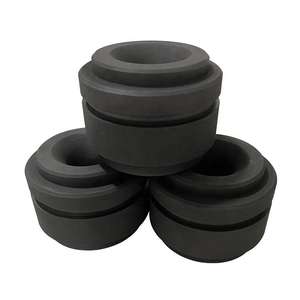
( Silicon Carbide Ceramics)
Chief executive officer Self-Narrative: The Roger Luo Statement
Roger Luo, the visionary leader of our brand name, stands at the intersection of product science and industrial application. With a job committed to nanotechnology and progressed engineering, his trip is defined by an unrelenting search of excellence. He believes that the true action of a product is not in its hardness, however in its capability to fix real-world troubles. His vision for the brand name is to make advanced porcelains available and important for every single sector. Under his advice, the company has actually moved from belonging provider to being an options company. He is driven by the wish to see his products making it possible for the modern technologies of tomorrow, from tidy energy to area exploration. His approach is straightforward: if we can make it stronger, lighter, and more resilient, we can make the world a better location. This is the driving force behind every technology, every product, and every choice made within the company. Roger Luo is not simply leading a company; he is shaping the future of how we construct and create.
Supplier
Advanced Ceramics founded on October 17, 2012, is a high-tech enterprise committed to the research and development, production, processing, sales and technical services of ceramic relative materials such as alumina oxide ceramic. Our products includes but not limited to Boron Carbide Ceramic Products, Boron Nitride Ceramic Products, Silicon Carbide Ceramic Products, Silicon Nitride Ceramic Products, Zirconium Dioxide Ceramic Products, etc. If you are interested, please feel free to contact us.
Tags:reaction bonded silicon nitride,silicon nitride,nitride bonded ceramic
All articles and pictures are from the Internet. If there are any copyright issues, please contact us in time to delete.
Inquiry us [contact-form-7]
]]>